
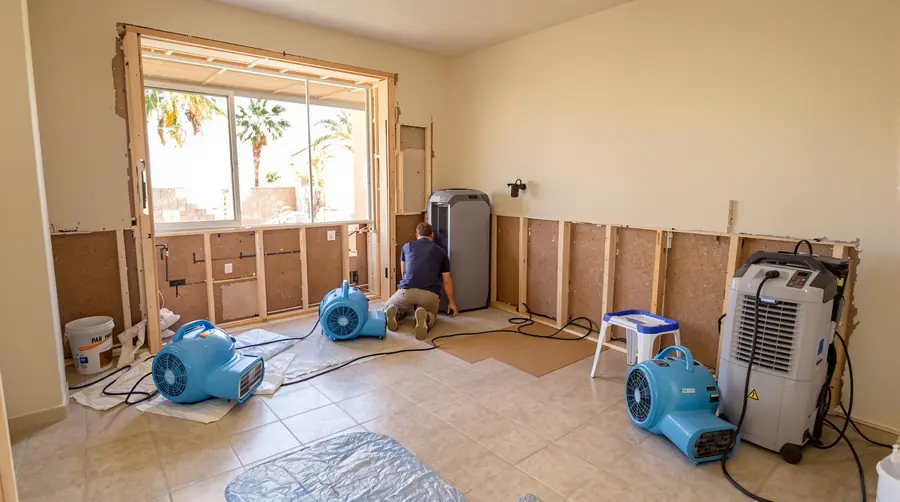
Most homeowners can stay put during water damage drying, and most of them do. Your home gets loud, warm, and a little inconvenient for three to five days, but it stays livable. Our IICRC certified team at RemediationX handles water damage drying across the Las Vegas metro. We would rather tell you what that week actually feels like than let you find out at 2 a.m.
What Living With Drying Equipment Is Like
Expect steady noise, warm rooms, and a lot of moving air. A typical setup runs several air movers and a dehumidifier around the clock. They stay until the readings say the structure is dry. Picture a few shop fans and a space heater sharing one room.
Air movers run at roughly the volume of a shop vac, and they do not turn off at bedtime. This is the complaint we hear most.
The Noise Is What People Underestimate
Air movers put out a low, steady roar, about the volume of a running vacuum. You can talk over it. Sleeping in the same room usually does not work, so most families shift to a different bedroom for a few nights. That one change solves most of the complaints we hear.
Yes, It Gets Warmer in Here
Dehumidifiers give off heat while pulling water out of the air. In a Las Vegas home, that can push the work area several degrees above the rest of the house.
Keep your AC running like normal. Do not open windows to cool things off, since that drags humid outside air into a space we are working hard to dry.
Why We Don’t Shut the Gear off at Night
Switching the equipment off overnight erases the day’s progress. Humidity climbs, damp materials pull moisture back in, and the timeline stretches. It also opens a window for mold, which can take hold on wet material within a day or two.
The EPA guide to mold and moisture in the home is blunt about the tradeoff. Control the moisture, and you control the mold.
Drying is not a vibe check, either. We work to the IICRC S500 standard, which spells out how moisture gets measured, logged, and verified.
A tech stops by daily to take readings and shift gear toward stubborn wet spots. Want the stage by stage version? Our homeowner timeline for water mitigation and drying covers each phase.
Living through a dry out right now?
Our team answers around the clock and aims to reach anywhere in the Las Vegas metro within 30 minutes. Inspections and estimates are free, so call us or reach out online.
Contact Our Team Containment Barriers and Room Access Containment is plastic sheeting sealed across doorways to hold drying air and dust inside the work zone. It looks dramatic. It is also why the rest of your home stays clean while one area gets dried.
Most barriers have a zipper. Use it, then seal it behind you. If a barrier blocks you every day, tell your tech instead of pulling it down.
Zippered access keeps the work zone sealed while you still get through.
Bathrooms and kitchens cause the most friction. A bathroom getting bathroom water damage repair may lose its vanity or flooring for days. In kitchens we pull toe kicks and drill cabinet bases, because drying behind cabinets after a kitchen leak is where hidden damage lives.
Is Staying Safe for Kids and Pets?
For a typical clean water loss, yes, with a few ground rules. The real risks are not exotic. They are cords, open edges, and curious hands.
We tape down what we can and keep hoses out of walking paths. Even so, a house mid drying has more trip hazards than usual, and toddlers treat an air mover like a toy with a switch.
1. Keep pets out of the containment zone.
2. No unplugging anything, not even for a phone charger.
3. Tell us about asthma, allergies, or a pregnancy up front.
4. Shoes on in the work area. Exposed staples are common.
5. Call us if a fan stops or trips a breaker.
Contaminated water changes the answer. If the loss started as a sewage backup, that space is off limits until it is cleaned and dried. Same goes if someone at home has a weakened immune system or a serious breathing condition.
Moisture left inside a wall is what causes trouble months later. That is why we hunt for hidden water damage before mold starts instead of drying only what shows.
When Relocation Makes More Sense
Relocation makes sense when the work zone swallows something you cannot live without, or when it is too large to fence off. Nobody wins a prize for toughing it out in a half opened house.
Consider staying elsewhere if any of these apply.
- Your only full bathroom sits inside the containment zone
- The kitchen is unusable and a week of takeout is not realistic
- Sewage or other contaminated water reached living space
- Someone at home has severe asthma or a compromised immune system
- Demolition is happening in several rooms at once
A few nights away is a reasonable call. Ask your adjuster about temporary housing before booking.
Drying is the short chapter. The longer stretch is rebuild and reconstruction, when floors and drywall go back in. That is when more families move out, and we can usually flag it early.
Still not sure whether to stay or go?
Talk it through with us before you book a hotel. Our team at RemediationX covers Las Vegas, Henderson, and Summerlin, and we will give you a straight answer about your home. Call us any time.
Frequently Asked Questions
How loud is water damage drying equipment?
Air movers run at roughly the volume of a household vacuum, a low steady roar rather than a sharp noise. Sleeping in the same room is tough, so most people move to another bedroom.
Can I turn the fans off while I sleep?
Please do not. Shutting the gear off lets humidity rebound, which can add days to drying and raise the risk of mold. If the noise is unbearable, call us and we will look at repositioning the equipment.
How many days will the equipment be in my house?
Three to five days covers most typical losses. The readings decide, not the calendar. Equipment comes out once every wet material hits its dry target.
Will my power bill go up while the equipment runs?
Yes, noticeably, because the gear runs around the clock for several days. Hold onto that bill, since the increase is often reimbursable as part of a water damage claim.