
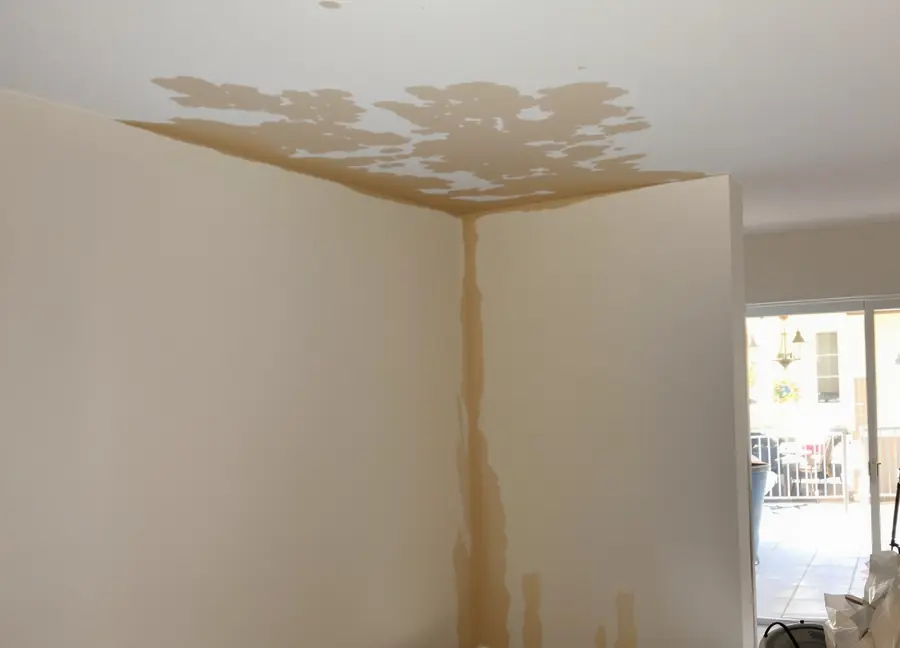
In Nevada, a condo building where units stack on top of each other or share walls has to carry a master policy that covers the units themselves, not just the roof and the halls.1 That one line of state law changes who pays when water comes through your ceiling. In most Las Vegas condo leaks, the HOA’s master policy pays first for the building, your own HO6 pays for your upgrades and your things, and the owner whose pipe failed may get handed the deductible. Your CC&Rs can move any of those lines. We wrote this so you can sort out which part is yours before the arguing starts.
What the HOA Master Policy Has to Cover in Nevada
Nevada’s common interest law, NRS chapter 116, sets a floor for every association’s insurance. The association has to carry property insurance on the common elements. In a building where units are split by floors and ceilings, or by shared walls, that policy also has to include the units.1
- What it must include. The units, plus the common elements like the roof, the outside walls, the halls and the shared pipes.1
- What it can leave out. Improvements and betterments that owners put in, like a remodeled kitchen or new wood floors.1
- The fine print. The coverage is required only to the extent it’s reasonably available, and it comes with reasonable deductibles. If the board can’t get it, it has to tell every owner.1
- Who pays first. When your own policy covers the same loss, the master policy is the primary one.4
That last point matters on a big leak. Your HO6 isn’t meant to write the first check for damage the master policy covers.
The master policy also can’t be turned on you. It has to waive the insurer’s right to come after any owner, or anyone in the owner’s household, to win back what it paid. An owner’s own act can’t void the policy either.4
A Detached House in an HOA Works Differently
If your home doesn’t share a wall or a ceiling with anyone, the stacked unit rule doesn’t apply. The HOA’s property policy covers the common elements, like a clubhouse or a pool.1 A leak inside your house is yours and your homeowners policy’s to handle.
What Stays on You as the Owner
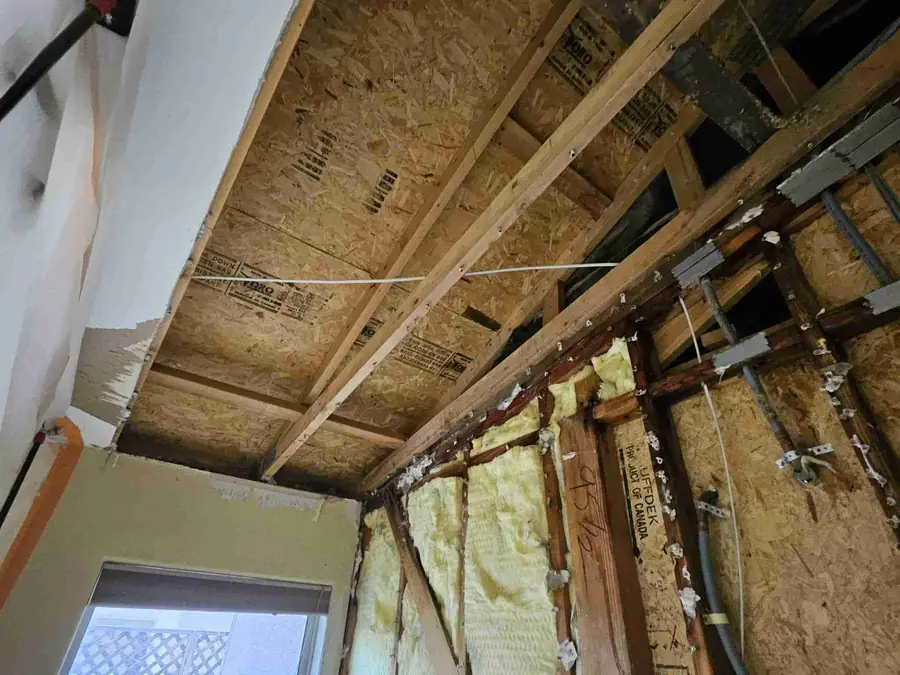
The law draws the line at the paint. Unless your declaration says otherwise, when walls, floors or ceilings are the edges of your unit, the drywall, plaster, paint, tile, wallpaper and finished flooring belong to your unit. Everything behind them is a common element.2
Pipes get a similar rule. A pipe, duct or fixture that sits partly in your unit and serves only your unit is a limited common element tied to you. One that serves more than one unit is a common element.2
Upkeep follows the same split. The association has to maintain, repair and replace the common elements. You have to maintain, repair and replace your unit.3 The cost to fix a limited common element is charged to the unit it serves, unless your governing documents say something else.5
So a leak at your own toilet supply line, dishwasher hose or water heater is usually yours to fix. A leak in a shared riser or a main drain stack that serves the building is usually the HOA’s.
What an HO6 Policy Picks Up
Your own condo policy, called an HO6, fills the gaps the master policy leaves. State Farm lists five parts.8
- Personal property. Your furniture, clothes and electronics.
- Loss of use. Extra costs like a hotel, meals and laundry if a covered loss makes the unit unlivable.
- Personal liability. If you’re sued for damage you’re responsible for, like water from your unit into the one below.
- Loss assessment. Your share when the association assesses owners after a covered loss.
- Dwelling. The inside of your unit, including what the master policy leaves to you.
State Farm suggests insuring the unit at about 20 percent of its total value as a typical starting point. The right number depends on what your bylaws make you responsible for.8
Who Pays, Leak by Leak
Most condo fights come down to where the water started. Use this as a starting map, then check it against your own CC&Rs.
Your upgrades are the gray zone. The master policy doesn’t have to cover improvements owners added.1 If you put wood floors over the builder’s carpet, the difference can land on your HO6.
Water from the unit above is the one that stings. The master policy can still pay to fix your ceiling. But the owner upstairs may be asked to cover the deductible, and that’s where the money gets tense.
The Deductible Bill and Loss Assessment
Master policies carry deductibles, and the law only says they have to be reasonable.1 When a loss is under the deductible, or the deductible has to be paid, someone covers that gap.
Nevada lets an association charge damage to one unit when it comes from the willful misconduct or gross negligence of that owner, a tenant or a guest. It can do that even when the association has insurance for the damage.5
A supply line that bursts without warning isn’t gross negligence on its face. Some governing documents go further, though, and pass the deductible to the owner where the loss started. Merlin Law Group describes that pattern in its write up on HO6 loss assessment.9 Read that section of your CC&Rs before you pay a bill or refuse one.
This is what loss assessment coverage is for. It helps pay your share when the association assesses owners after a covered loss.8 Default limits are low. Merlin Law Group says most HO6 policies carry about $1,000, that raising it to $25,000 is an option, and that even then deductible assessments often stay capped at $1,000. It suggests asking for at least $50,000 where you can get it.9
Call your agent with two questions. What’s the master policy deductible, and does my loss assessment limit cover my share of it?
First Steps When Water Comes Through Your Ceiling
Every hour counts more than every form. The EPA says to dry wet areas and items within 24 to 48 hours to keep mold from growing.10
- Knock on the door above. If nobody answers, call the HOA manager’s after hours line and ask them to shut off water to that unit.
- Turn off the power to any light or fan where water is dripping through.
- Take photos and video of the ceiling, the floor and anything wet before you move it.
- Tell the HOA in writing the same day, by email or the owner portal, and note the time.
- Open a claim with your own insurer, even if you expect the master policy to pay. Your things and your upgrades are on your side either way.
- Ask the association in writing for a certificate of the master policy. The insurer has to issue one to any owner who asks in writing.4
- Let the crews in. Owners have to give the association and other owners reasonable access through their unit for repairs.3
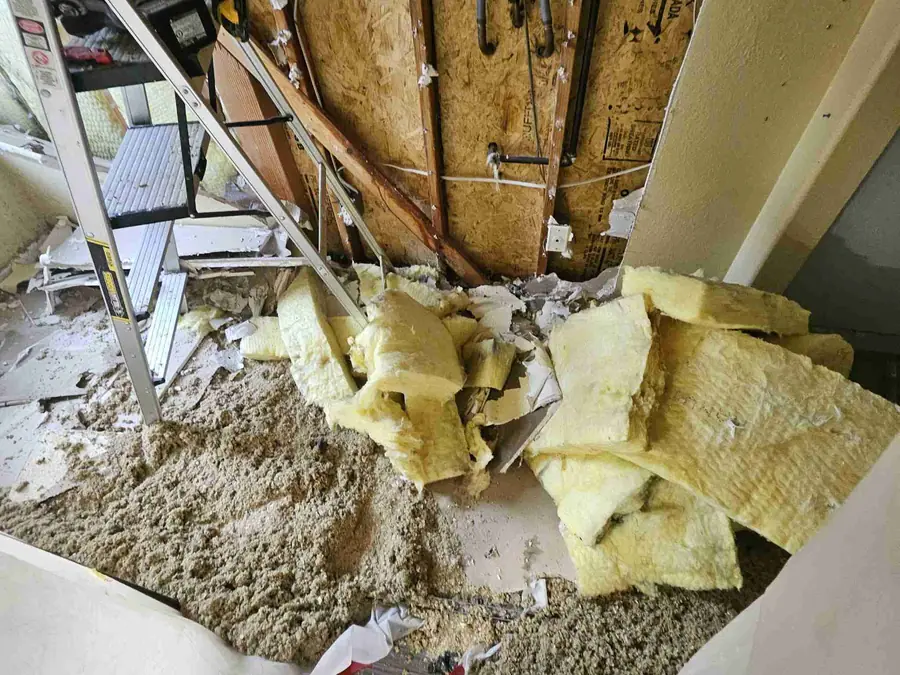
Not sure where the water is coming from? The ceiling leak guide walks through tracing it, and leak detection is the next step when it’s hidden inside a shared wall.
When You and the HOA Don’t Agree
Start with the paper. Ask for the declaration, any maintenance chart and the master policy certificate. Put the page number in your email when you make your case.
If the fight is about what the CC&Rs mean, Nevada says you can’t go straight to court. A civil action over how the covenants, conditions or restrictions are read or enforced has to go to mediation first, or to a program both sides agree to. A court has to dismiss a case filed without that step.6
Those claims are filed in writing with the Nevada Real Estate Division.6 Its ombudsman for owners in common interest communities helps owners understand their rights under the law and their association’s documents, and helps process mediation and arbitration claims.7
A dispute with the owner upstairs is a separate thing. It’s between two owners and their insurers, and it doesn’t wait on the HOA. Don’t let any of it hold up the drying.
We’d rather see the paperwork sorted while the walls dry than the other way around. Wet drywall can’t wait for a mediation date. RemediationX handles water damage restoration across the Las Vegas valley and works directly with your insurance, and the insurance claims process page shows how that goes.
Things to Settle
Who is responsible for a leak from an upstairs condo in Nevada?
The owner upstairs usually fixes their own leaking line or appliance, since each owner repairs their own unit under NRS 116.3107. Damage to the building in a stacked condo is often paid by the HOA’s master policy first. The association can charge it to the upstairs owner when it came from gross negligence or willful misconduct, and your CC&Rs may pass the deductible on too.
Does the HOA have to fix a pipe inside my wall?
It depends on what the pipe serves. A pipe that serves only your unit is tied to your unit, and its repair is charged to you unless your documents say otherwise. A pipe that serves more than one unit is a common element, and the HOA repairs it.
Does condo insurance cover water damage from the unit above?
Your HO6 usually covers your belongings, your upgrades and extra living costs. In a Nevada building with stacked units, the building itself falls on the master policy first. If the HOA bills you part of its deductible, loss assessment coverage on your HO6 may help, up to its limit.
Can I sue my upstairs neighbor for water damage in Nevada?
A claim between two owners is a regular property damage claim, so it doesn’t need the HOA’s permission. A fight with the HOA over what the CC&Rs mean is different. Nevada requires mediation through the Real Estate Division before that kind of lawsuit.
Is a ceiling leak an emergency?
Treat it like one. A sagging ceiling can come down, and the EPA’s 24 to 48 hour window to prevent mold starts when the water does. Shut off the source, keep people out from under it and get drying started.
Studies and Pages
| What We Cited | Where It Came From |
|---|---|
| 1. Master policy must cover the units in buildings with stacked units or shared walls, need not cover owner improvements, reasonable deductibles, notice to owners if not available, NRS 116.3113 | Nevada Legislature, NRS chapter 116Nov 2026 |
| 2. Finished surfaces are part of the unit, fixtures serving one unit are limited common elements, NRS 116.2102 | Nevada Legislature, NRS chapter 116Nov 2026 |
| 3. Association repairs common elements, owners repair their units, access through units, NRS 116.3107 | Nevada Legislature, NRS chapter 116Nov 2026 |
| 4. Owners are insureds, no subrogation against owners, master policy is primary, certificates on written request, NRS 116.31133 | Nevada Legislature, NRS chapter 116Nov 2026 |
| 5. Limited common element costs charged to that unit, damage from willful misconduct or gross negligence charged to that unit, NRS 116.3115 | Nevada Legislature, NRS chapter 116Nov 2026 |
| 6. Mediation before a lawsuit over CC&Rs, claims filed with the Division, NRS 38.310 and 38.320 | Nevada Legislature, NRS chapter 38Nov 2026 |
| 7. Ombudsman duties for owners in common interest communities | Nevada Real Estate Division, Office of the OmbudsmanNov 2026 |
| 8. HO6 parts, master policy types, insuring at about 20 percent of value as a starting point | State Farm, Condo Insurance BasicsNov 2026 |
| 9. Loss assessment defaults of about $1,000, $25,000 option, deductible assessments capped at $1,000, $50,000 suggested (October 2025) | Merlin Law GroupNov 2026 |
| 10. Dry water damaged areas within 24 to 48 hours to prevent mold | US EPANov 2026 |