
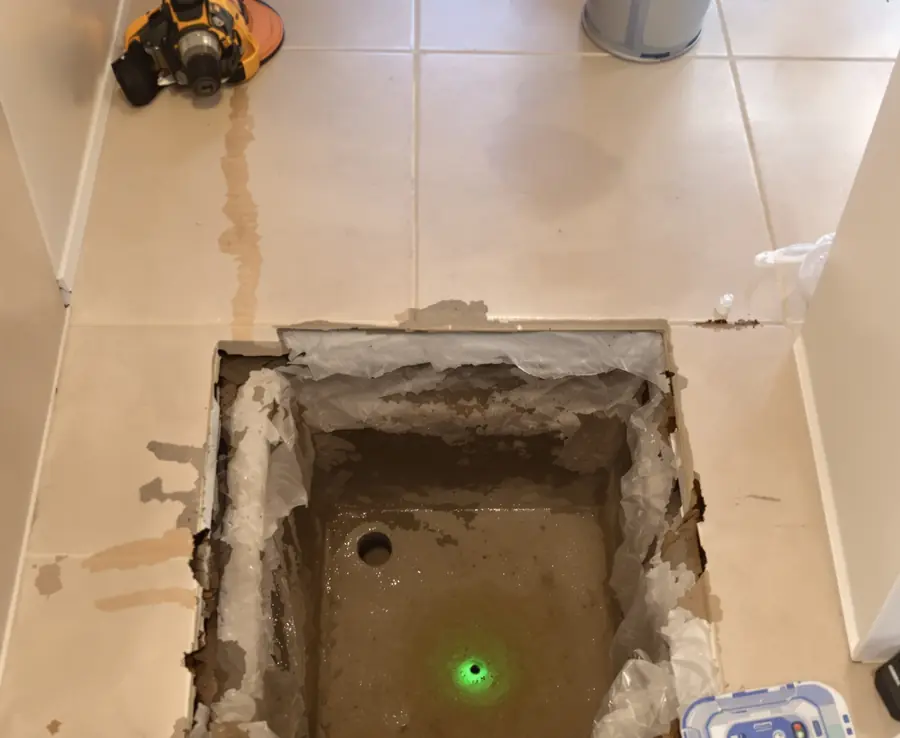
The water district may spot your slab leak before you do. The Las Vegas Valley Water District now contacts account holders when its meters see continuous flow for at least three days.1 That alert can’t say where the water is going, and that’s where we come in. A meter that keeps moving with every fixture off is the strongest sign of a hidden leak. A warm patch of floor, a jump in the bill, the sound of running water, a damp floor, weak pressure and a musty smell are the other six.
Why Slab Leaks Hide in Las Vegas
Most homes here sit on a concrete slab with no basement. When a line under that slab fails, there’s no crawl space to drip into and no basement wall to stain. The water moves sideways under the flooring and up into the walls.
Dry desert air makes this worse. A damp edge can dry at the surface and look fine by the next morning, while the water underneath keeps coming. So a spot that vanishes isn’t proof the leak stopped.
The lines themselves are often the weak point. This Old House says slab leaks mostly start when copper water lines under the concrete corrode or wear out.2 You’ll also hear hard water blamed. The water district rates ours as very hard, at 16 to 17 grains per gallon,3 but that number alone can’t tell you why one pipe failed. Treat it as background, not as a diagnosis.
The 7 Signs, Strongest First
1. The Meter Moves With Everything Off
This is the one sign you can test today, and the next section walks through it. A meter that keeps counting means water is going somewhere. It doesn’t prove the slab is the place, so it’s the start of the search and not the end.
2. A Water Bill That Jumps for No Reason
Compare the same month last year, since summer irrigation makes a straight month to month check useless. The EPA suggests looking at a colder month, and says a family of four using more than 12,000 gallons a month in January or February could have a serious leak.4 Winter is your cleanest baseline here, because outdoor watering isn’t hiding the number.
3. A Warm Patch of Floor
Warm tile with nothing under it is a strong clue, and bare feet find it first. These hot spots tend to follow the path of a leaking hot water line.2 A warm floor points to the hot side of the plumbing, which narrows the search. Pets often find the spot too, so notice if one suddenly starts sleeping in a new place.
4. Running Water When Nothing Is On
Wait for a quiet hour, shut off every fixture, and listen near the floor and low on the walls. The sound can come and go.2 It can also come from a pipe in a wall, so hearing it doesn’t settle where the leak sits.
5. Damp Carpet or a Wet Floor Edge
Damp patches that come back after drying are the pattern to watch, and they often show up near walls and baseboards.2 On tile, look for dark grout lines. On wood or laminate, look for edges that lift or cup. Water outside against the foundation, with no rain and no sprinkler to explain it, belongs on this list too.
6. Pressure That Drops Across the House
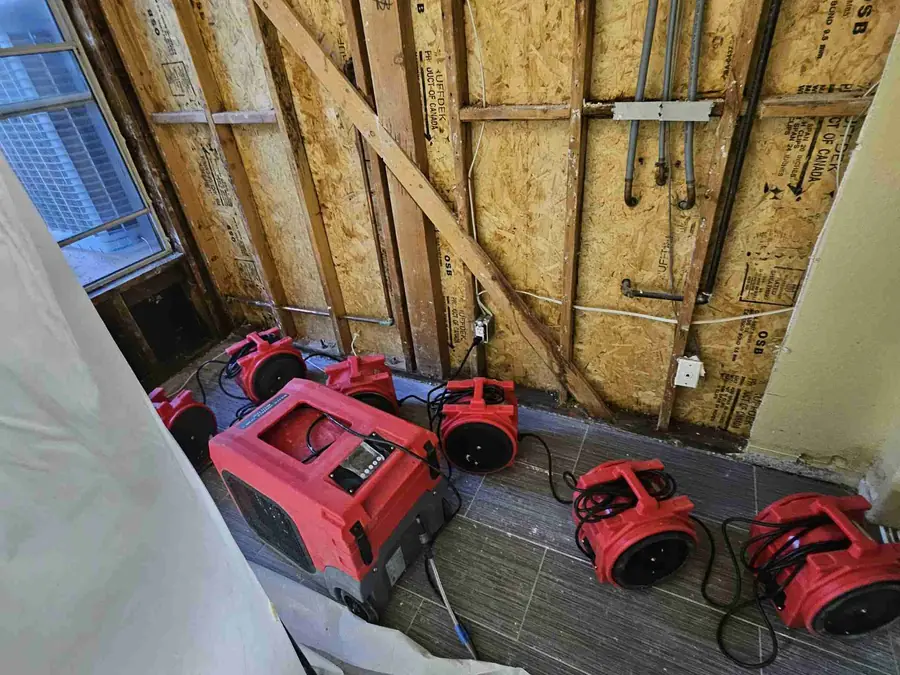
One weak faucet is usually that faucet. Weak pressure at several fixtures at once is different, because water escaping under the slab can lower pressure through the whole system.2 Clogged or damaged pipes can do the same, so this sign needs a partner from the list before it means much.
7. A Musty Smell or New Cracks Low on the Wall
A musty smell that stays after cleaning means something is wet where you can’t see it. Hairline cracks low on walls or baseboards can come from a slab leak, and they can also come from a structural problem, so have them looked at either way.2 These two tend to arrive late. By then the water has had time to spread.
Run the Meter Test Before You Call Anyone
The test takes about two hours and costs nothing. It works best at a time when nobody needs water.
- Find your meter. Most homes on the district’s system have it near the front yard or in the front sidewalk, under a lid marked water or LVVWD.5
- Turn off all the water inside and outside the home, including irrigation and any ice maker or softener cycle.
- Older mechanical meters have a red or white flow triangle. If it’s moving, you may have a leak.1
- Newer ultrasonic meters have no moving parts,5 so don’t wait for a triangle to spin. Write down the reading on the display instead.
- Check the reading again after two hours with no water in use. The EPA says any change probably means a leak.4
- Close the main shutoff and check again. If the meter keeps moving, the district says the leak is most likely underground between the shutoff and the meter. If it stops, the leak is somewhere else around the home.1
That last step sorts the problem. A meter that stops when the main is closed means the water is going somewhere on the house side, which is where a slab leak would be. Rule out the easy leaks before you assume the worst. Put a few drops of food coloring in the toilet tank, and if color reaches the bowl within 10 minutes, the toilet is leaking.4 The district also lists softeners, faucets, pools and irrigation as common sources.1
A leak of a quarter gallon a minute doesn’t sound like much. Left alone, it’s 360 gallons a day going under your floor.
What to Do Once the Signs Line Up
Close the main shutoff if the water is showing or the floor is getting wetter. Take photos of the floor, the walls and the meter reading with the date showing. Move furniture and rugs off damp areas.
Don’t open the floor to look for it. Tools like thermal imaging, acoustic listening and pressure testing can find the source without tearing up the place first.
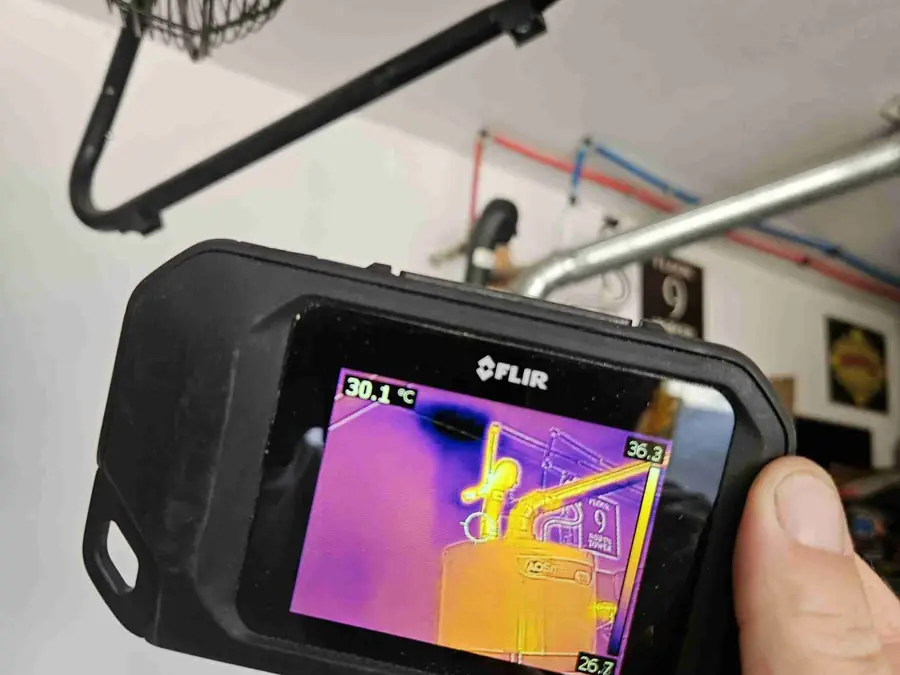
The next job is really two jobs. A plumber repairs the pipe. Then the wet flooring, walls and framing have to be dried, because a fixed pipe doesn’t dry a soaked slab. Our page on plumbing failure water damage covers that second part.
This Old House puts the repair itself at $630 to $4,400 on a national basis, with an average of $2,300, and says costs can reach $6,750.2 Those are national repair figures and they don’t include drying or rebuilding. Get a written scope for your own home before you plan around any number.
Things to Settle
How long can a slab leak go undetected?
There’s no fixed limit, since it depends on how fast the water escapes and where it goes. A small leak can run for a long time when dry air keeps the surface looking normal. The water district’s alert starts after at least three days of continuous flow, so read any notice from them closely and run the meter test.
Is a warm floor always a slab leak?
No. A warm spot can have other causes, like a heat source below or sun through a window. It’s worth checking when the spot stays warm at night, or when it shows up along with a moving meter or a higher bill.
Can I stay in the house with a slab leak?
Often yes, if the water can be shut off when it isn’t in use and the floor isn’t soaked. Leave if there’s sewage, a strong musty smell that bothers anyone in the home, or water near outlets and electrical panels. Our guide to [the insurance claims process](/insurance claims process/) covers what to document along the way.
Does insurance cover a slab leak in Nevada?
That depends on your policy. The pipe repair, the access through the floor and the water damage can be treated differently, so ask your carrier how each one is handled before work starts, and keep your photos and meter readings.
Studies and Pages
| What We Cited | Where It Came From |
|---|---|
| 1. Leak alerts after three days of flow, the meter and shutoff steps, common leak sources | Las Vegas Valley Water DistrictNov 2026 |
| 2. Slab leak signs, copper line causes, national repair costs | This Old HouseNov 2026 |
| 3. Local water hardness of 16 to 17 grains per gallon | Las Vegas Valley Water DistrictNov 2026 |
| 4. The 12,000 gallon winter check, the two hour meter test, the food coloring test | US EPA WaterSenseNov 2026 |
| 5. Where meters sit, new ultrasonic meters with no moving parts | Las Vegas Valley Water DistrictNov 2026 |