
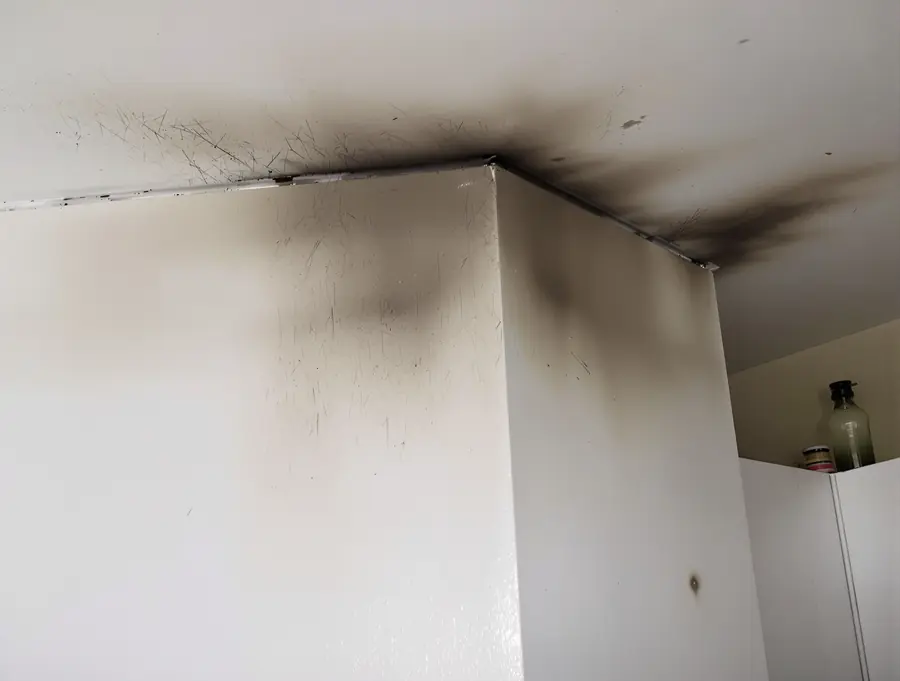
Nevada gives your insurance company 20 working days just to say it got your claim.5 Soot doesn’t wait that long. Smoke damage is the odor and gases that soak into the house, and soot damage is the dark residue that settles on every surface and keeps eating at it.1 One you mostly air out and wash. The other you have to get off fast, before it stains and etches what it touches. We see the same mistake after small kitchen fires in the valley. People wait on the adjuster and leave the soot sitting.
What Smoke Leaves and What Soot Leaves
FEMA describes smoke as a mix of gases, like carbon monoxide and carbon dioxide, plus tiny bits of particle matter.1 When the smoke clears, the two parts go different ways.
The gases soak into the air and into soft, porous things. Couches, carpet, drywall, clothes. That’s smoke damage, and most of it is smell.1
The particles drop out and land on surfaces as soot and ash. FEMA says soot is what’s left when something doesn’t burn all the way. It’s made of small dark particles about 0.1 micrometer across. Ash is the larger, lighter colored stuff, about 1 to 10 micrometers.1
So soot is the part you can see and wipe, and smoke is the part you can only smell. Most fires leave both. The mix tells you how much work is ahead.
Why Soot Does More Damage
Soot isn’t just dirt. FEMA says fire residue can be very alkaline or very acidic, and if it isn’t removed in time it can etch metal surfaces for good.1 Its list of smoke and soot damage includes metal corrosion, plastic breakdown and stained materials.1
Soot is also greasy and gritty. A FEMA fact sheet written with Smithsonian conservators warns that soot’s fine particles stick to everything and every touch grinds them in deeper. It also says skin oils can fix the greasy residue into absorbent surfaces for good.2
Time works against you. The same fact sheet says the longer soot stays on an item, the harder it is to get off.2
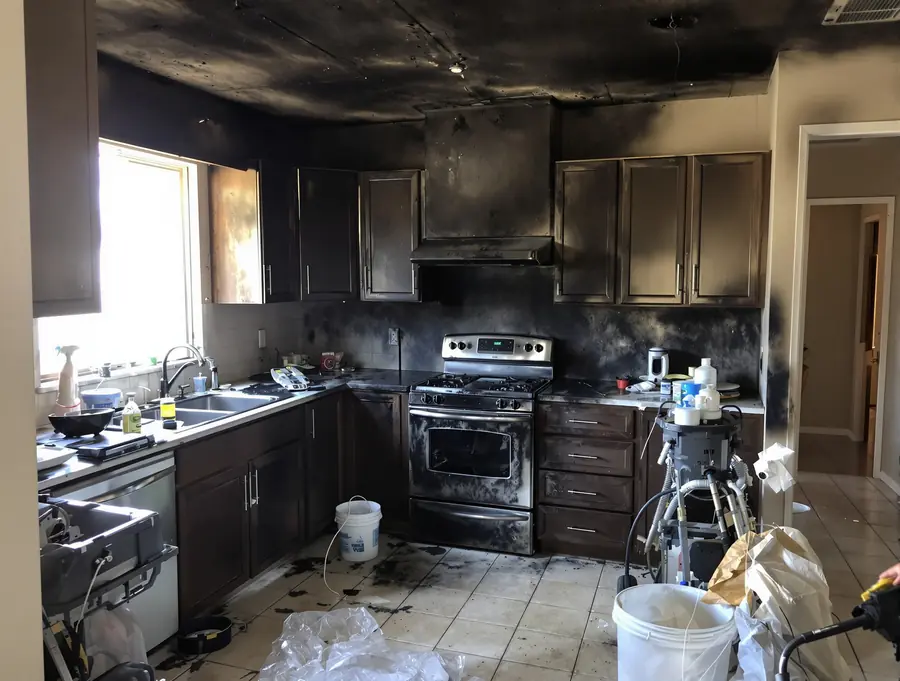
The Wipe Test That Sorts Your House by Room
FEMA’s homeowner guide for smoke damage uses two quick checks in every room.1 It was written after Colorado’s Marshall Fire, a wildfire, but the checks are a fair first look after a house fire too.
- Smell. FEMA’s advice is to follow your nose. A smoke odor means some level of smoke damage.1
- Wipe. Put on clean gloves and run a fresh alcohol wipe across a flat surface that isn’t painted or sealed, like raw wood. Then look at the wipe.1
Bag each wipe in a zip bag, write the date and the room on it, and photograph it. FEMA suggests keeping those samples with your notes for the insurance company.1
The results put each room in one of four groups.
FEMA adds a fifth case. If anything structural burned, don’t go in until the fire department clears it, and bring in a contractor for both the fire and the smoke damage.1 The US Fire Administration says the same thing. Don’t enter until the fire department says it’s safe, and don’t turn the utilities back on yourself.3
Smoke Only Rooms You Can Usually Save
A room that smells like smoke but passes the wipe test is light damage. FEMA lists four steps for it.1
- Air it out. Open windows and doors, unless the air outside is still smoky.1
- Filter it. Put a MERV 11 or higher filter in the air handler and run the fan on constant.1
- Absorb it. Set out activated charcoal bags. FEMA says to skip perfume sprays and odor maskers, because they don’t remove smoke odor and can add new smells that are hard to trace.1
- Wash it. If one room smells strong, clean the fabrics in it, like linens and curtains.1
If the smell is still there after that, FEMA says plan on a deeper clean.1 Smell that hangs on usually lives in something porous, like a couch cushion, a mattress or the drywall itself, since that’s where FEMA says the gases soak in.1
Smoke moves through the whole house, so don’t judge only the room that burned. The US Fire Administration warns that things the fire never touched may still be ruined by smoke or soaked by the water used to put it out.3
Soot Rooms Need a Different Order
Light soot on the wipe is moderate damage. FEMA says you can take it on yourself, but the order matters more than the cleaner.1
Stop Spreading It First
- Wear goggles, an N95 or P100 respirator, gloves, long sleeves and closed shoes.1
- Walk through the house as little as you can. FEMA says soot on hard floors means soot in the carpet too, and foot traffic grinds it in.1
- Keep the air handler off until most of the soot is gone, or it blows soot back onto rooms you already cleaned.1
Then Clean Top Down
- Hard floors get a damp cloth or a cleaning pad sweeper. Carpet and soft furniture get a HEPA vacuum. Plan on more than one pass.1
- Bedding, towels and clothes with visible soot go through the washer.1
- Walls and ceilings get a damp wipe with water and a mild detergent, starting high and working down. Test a hidden spot first.1
- Dishes and glasses with soot can go through the dishwasher.1
- Electronics get turned off and HEPA vacuumed, not wet wiped.1
- Last, wipe the vent covers, put in a new MERV 11 or higher filter, and have the ducts and furnace cleaned by a pro.1
Keep water away from soot on photos, books and keepsakes. The FEMA conservator fact sheet says water drives soot and ash deeper into an item. Vacuum it off dry on low suction instead, with the nozzle off the surface.2
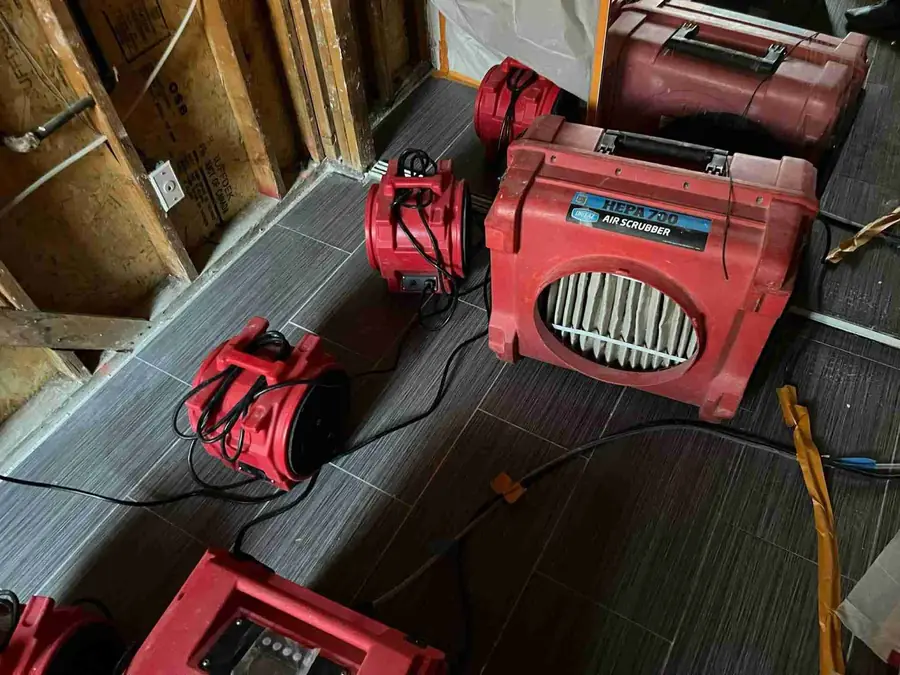
Heavy soot is a different job. FEMA tells homeowners to hire a professional cleaning company when a heavy wipe test doesn’t clear after a deep clean.1 Heavy soot rarely comes alone. The US Fire Administration notes that the water used to fight a fire soaks things too, so drying is often part of the same job.3
What to Throw Out, Even If It Looks Fine
Food is the line most people get wrong. The USDA’s food safety service says to throw out all food that was near a fire, because heat, smoke fumes and firefighting chemicals can’t be washed off.4
- Food in cans, bottles and jars. The USDA says the heat can damage the container and wake up spoilage bacteria, even when it looks okay.4
- Food in the fridge and freezer. Refrigerator seals aren’t airtight, so fumes get in.4
- Open boxes and half closed bags, like cereal. FEMA says to toss them and photograph them first.1
- Baby bottles, pacifiers, and CPAP or oxygen masks and tubing. FEMA says consider replacing them rather than cleaning them.1
Medicine is a call for your doctor. FEMA tells you to ask your medical provider before you use medicine or medical equipment that sat in the smoke.1
Cookware doesn’t have to go. The USDA says to wash pans hit by firefighting chemicals in hot soapy water, then soak them for 15 minutes in 1 tablespoon of unscented liquid chlorine bleach per gallon of drinking water.4
Snap a photo of everything before it goes in the bin. FEMA repeats that advice at every step, and the guide to documenting damage for insurance before cleanup walks through how to do it room by room.
Why the Next Two Weeks Matter in Las Vegas
Thanksgiving is close. The National Fire Protection Association says it’s the peak day of the year for home cooking fires. It counted an estimated 1,139 of them on Thanksgiving Day 2024, about 321 percent of the daily average.6
Here in Nevada, the claim clock is slow next to soot. The state’s insurance rules give the company 20 working days to acknowledge your claim.5 After you send in a complete proof of loss, it has 30 working days to accept or deny it, and 30 days to pay once it accepts.7
That’s weeks. FEMA says residue left on surfaces can etch metal for good.1 So call your insurance company right away and ask what you should do first, which is the US Fire Administration’s advice too.3 Ask in writing whether you or the insurer pays for the cleaning, and get a written cost estimate from any cleaning company.3
Then start the safe steps while you wait. Air out, bag the wipes, photograph every room and toss the food. Those don’t change what the adjuster sees. They keep a soot problem from becoming a replacement problem.
The insurance claims process page covers how a restoration claim moves from that first call to the rebuild.
Smoke vs Soot in Four Lines
- Smoke is gas plus fine particles. It soaks into porous things and shows up as smell. Most light smoke rooms can be aired out and washed.1
- Soot is the dark residue the particles leave. It stains, corrodes and etches, and it gets harder to remove the longer it sits.12
- The wipe test decides which one you have and who should clean it.1
- Food near the fire goes in the trash, sealed or not.4
We close where we started. Don’t let the claim timeline set the cleanup timeline. If the wipe comes back heavy, or the smell won’t leave after the light steps, the fire and smoke damage restoration page shows how soot cleanup, odor removal, packout and rebuild run on a valley home.
Things to Settle
What is the difference between smoke damage and soot damage?
Smoke damage is mostly odor from gases that soak into porous things like fabric and drywall. Soot damage is the dark residue that settles on surfaces after a fire. Soot can stain surfaces, corrode metal and break down plastic if it isn’t cleaned off in time.
Is the smell of soot bad for you?
FEMA lists breathing irritation, shortness of breath, worse asthma and possible exposure to cancer causing chemicals among the health effects of smoke, soot and ash. Wear an N95 or P100 respirator, goggles and gloves while you clean, and air the house out if the outside air is clear.
Is it safe to sleep in a house after smoke?
Don’t stay in the house until the fire department says it’s safe to enter. After that, FEMA recommends testing after cleanup to confirm the home is safe for long term living, and running an air purifier until then.
Can I clean soot off walls myself?
For light soot, FEMA says yes. Damp wipe walls and ceilings with water and a mild detergent, start at the top and work down, and test a hidden spot first. If the wipe test shows heavy soot and a deep clean doesn’t clear it, FEMA says to hire a professional cleaning company.
What should I throw away after smoke damage?
The USDA says to throw out all food that was near the fire, including canned and jarred food and everything in the fridge and freezer. FEMA adds open food boxes, and suggests replacing baby bottles, pacifiers and CPAP or oxygen masks and tubing.
Does soot damage get worse over time?
Yes. FEMA says fire residue can permanently etch metal if it isn’t removed in time, and its conservator fact sheet says the longer soot stays on an item, the harder it is to remove.
How long does a Nevada insurer have to answer a fire claim?
Nevada’s insurance rules give the insurer 20 working days to acknowledge a claim, 30 working days after a complete proof of loss to accept or deny it, and 30 days to pay once it accepts.
Studies and Pages
| What We Cited | Where It Came From |
|---|---|
| 1. What smoke, soot and ash are, particle sizes, the wipe test, damage levels, cleaning steps, what to discard | FEMA, Homeowner’s Guide to Residential Smoke DamageNov 2026 |
| 2. Soot sticks and grinds in, no water on keepsakes, dry vacuuming, longer it sits the harder it is | FEMA and the Heritage Emergency National Task ForceNov 2026 |
| 3. Smoke ruins things the fire missed, safe entry, utilities, insurance first steps and written estimates | US Fire Administration, After the FireNov 2026 |
| 4. Throw out food near a fire, fridge seals, cookware bleach soak | USDA Food Safety and Inspection ServiceNov 2026 |
| 5. Insurer must acknowledge a claim within 20 working days, NAC 686A.665 | Nevada Administrative CodeNov 2026 |
| 6. Thanksgiving home cooking fires, 1,139 in 2024, 321 percent of the daily average | National Fire Protection AssociationNov 2026 |
| 7. 30 working days to accept or deny, 30 days to pay, NAC 686A.675 | Nevada Administrative CodeNov 2026 |