
The fall checks that actually prevent water damage are the unglamorous ones. Appliance hoses, caulk lines, irrigation spray, shutoff valves, and the cabinet under your sink. None take long. Our team at RemediationX handles water damage restoration across the Las Vegas metro, and most of our fall calls trace back to one of those five spots.
Why Fall Is the Right Time to Look for Water Damage Risks
Fall lands in the gap between two seasons that punish Las Vegas homes. Monsoon storms just finished pushing wind driven rain at your doors and windows. The holiday stretch hasn’t started, so nobody has run your guest bathroom eight times a day yet. That gap is when small problems are still small.
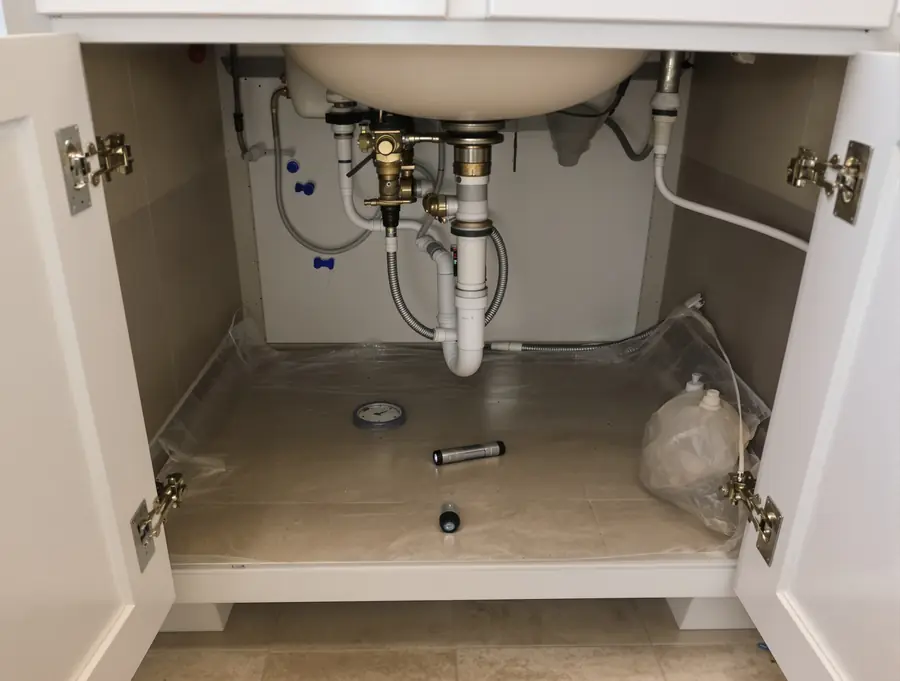
A flashlight and five minutes under each sink catches more problems than any other check on this list.
Which fall home maintenance checks actually prevent water damage?
Five checks cover the failures we see most. Appliance connections, caulk seals, irrigation overspray, shutoff valves, and under sink plumbing. Skip the internet’s 40 item fall checklist. These five cover most of the losses that turn into insurance claims.
1. Appliance Hoses and Connections
Pull your washer out a foot and look at the supply hoses. Rubber lines get brittle, then bulge near the fittings and split. Braided steel holds up longer, but the crimp is still where it eventually gives out.
Check the dishwasher and the fridge ice line too. Both hide behind something heavy and leak quietly for weeks. Slow appliance leak damage is the most common version of this call. The water heater gets its own walkthrough in our guide to protecting the water heater area from surprise leaks .
2. Caulk Around Tubs, Showers, Windows, and Doors
Run a fingernail along the caulk where your tub meets the wall. Cracked, chalky, or pulling away? Water gets behind the tile every time somebody showers.
Do the same at window sills and door thresholds, on whatever side took the worst summer storms. Those seals are where we find the door and window leak clues after wind driven rain .
Caulk is the easiest water damage prevention there is, and it fails quietly. Run a finger along the seam and look for gaps or cracking.
Found a soft spot or a stain you can’t explain?
Guessing usually means opening walls you didn’t need to open. Our technicians locate the source first, then figure out what has to come out. Call us and we’ll take a look.
See How Leak Detection Works 3. Irrigation spray hitting your exterior walls Turn each zone on and watch it. Heads drift over time. One that clips the stucco for ten minutes a day keeps that wall damp all year.
Adjust anything spraying the house, cap heads sitting too close, and reset the timer for cooler weather. Check the drip lines in planters against the house too.
4. Shutoff Valves You Can Find and Turn
Find your main shutoff and check that you can actually turn it. Then find the small valves under each sink and behind each toilet. Close each one and open it again.
Valves left alone for years seize up. The moment you need one is a bad time to find out it won’t budge. If a valve sticks or weeps, get a plumber out before it turns into an emergency.
5. Under Sink Plumbing and Cabinet Bases
Clear out the cabinet under each sink and look at the floor of it. Dark rings, swelling at the seams, or a musty smell point to a leak that’s been running a while. The EPA’s guide to mold, moisture, and your home notes that wet materials left past 24 to 48 hours are where mold starts. That’s why drying behind cabinets matters after a kitchen leak .
Pull the washer out once a year and look at the hose. Bulges, stiffness, and rust at the brass fitting all mean it is on borrowed time.
What does a realistic fall check schedule look like?
Realistic means one Saturday morning, not a maintenance binder. Nobody keeps a perfect schedule, so aim for a pass you’ll repeat. Here’s how the five checks break down.
The 20 minute version, if that’s all you’ve got
- Flashlight under every sink, check the cabinet floor
- Hand behind each toilet and the dishwasher, feel for damp
- Fingernail along the tub caulk line
- Turn the main shutoff off and back on
When is a professional inspection worth scheduling?
Call somebody out when you can see or smell water but can’t find where it’s coming from. A stain that returns after you paint over it means the source is still active. Guessing at that point costs more than the inspection would have.
- A water bill that jumped without a change in habits
- Warm or damp spots on a slab floor
- Musty smell in one room that won’t clear
- Baseboards separating or paint bubbling low on a wall
- A stain that comes back after repainting
Our techs are IICRC certified. The IICRC standards for water damage restoration set how moisture gets measured and what counts as dry. That matters. A wall can feel fine to the touch and still read wet behind the drywall. We don’t do plumbing repairs, so if we find a bad line we’ll say so and line up a plumber.
If something on your walkthrough looked off, get in touch with our team or call us. Inspections and estimates are free, and we’d rather look at a stain now than a ceiling in December.
RemediationX, the Water Damage Doctors of Las Vegas
A small local crew covering Las Vegas, Henderson, Summerlin, North Las Vegas, Paradise, and Spring Valley. Water damage, leak detection, mold, and the rebuild after. Call us any hour and a real person answers.
Frequently Asked Questions
How often should washing machine hoses be replaced?
Rubber supply hoses get swapped about every five years, braided steel every seven to ten. Replace either sooner if you see bulging, rust at the fittings, or stiffness when you flex the hose.
Can sprinkler overspray really cause water damage to a house?
Yes. A head hitting stucco every day keeps that wall damp. Over time the finish breaks down and water reaches the framing behind it. It’s slow, so most homeowners find it during a repaint.
Should I recaulk my tub myself or hire someone?
Recaulking a tub is a fine weekend job if the surface underneath is dry and solid. If the tile moves or the wall feels soft, stop and have it looked at. Caulking over a wet cavity traps the moisture.
What does a leak detection visit involve?
A tech uses moisture meters and a thermal camera to map where water is sitting, then narrows the source without opening extra walls. You get a clear answer on what’s wet, how far it spread, and what happens next.