
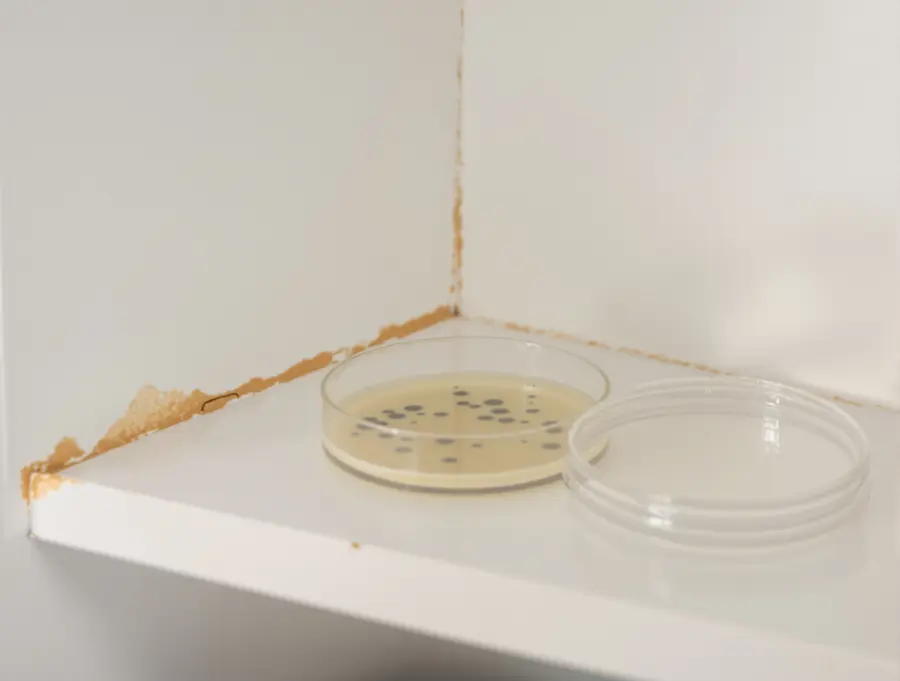
The Southern Nevada Health District lists mold as a nonessential rental complaint and doesn’t respond to landlord and tenant issues.1 No federal agency sets a passing score for mold in the air either.2 So in Las Vegas nobody official is coming to test your house, and the choice lands on you. A home mold test kit tells you that mold spores landed on a dish, and a mold inspection tells you where mold is growing, how far it goes and what water is feeding it. Only the second answer gives you something to fix. We’d rather you know that before you pay for either one.
What a Home Mold Test Kit Measures
Most hardware store kits are settling plates. You open a petri dish of growth gel, leave it out, close it and wait.
The instructions for one widely sold kit tell you to let the dish grow for 48 hours and look again at 72 and 96 hours for slow molds. Lab analysis is extra. The standard report costs $40 and comes within 7 days, and a 3 business day rush is $60.3
The trouble is what the dish can prove. The University of Connecticut’s safety office says it does not advocate using these kits. Its reasons are plain. Mold spores are in normal air indoors and outdoors, so it would be rare for a dish to grow nothing. The gel gives spores food, moisture and a surface. And there are no accepted standards for running the test or reading the result.4
So a dish with spots on it means you don’t live in a clean room. It doesn’t mean you have a mold problem.
Why a Lab Report Doesn’t Settle It Either
Paying the lab fee gets you a mold name and maybe a count. Neither comes with a pass or fail line.
The EPA says no standards or threshold limits for airborne mold or mold spores have been set, and sampling can’t be used to check a home against a federal mold standard.2 The CDC goes further. It doesn’t recommend mold testing, it says there are no set standards for how much of any mold is acceptable in a home, and it says you don’t need to know the type.5
A clean dish proves just as little. A dish on a shelf samples the air that falls on it. It can’t see the back of the drywall or the inside of a wall around a leaking pipe, which are two of the places the EPA lists for hidden mold.6
What a Mold Inspection Checks That a Kit Can’t
The EPA sums up mold in one line. The key to mold control is moisture control.6 An inspection is built around that line. A kit ignores it.
A RemediationX mold inspection has four parts.
- A visual check of the rooms, closets, attic access and anywhere water has been.
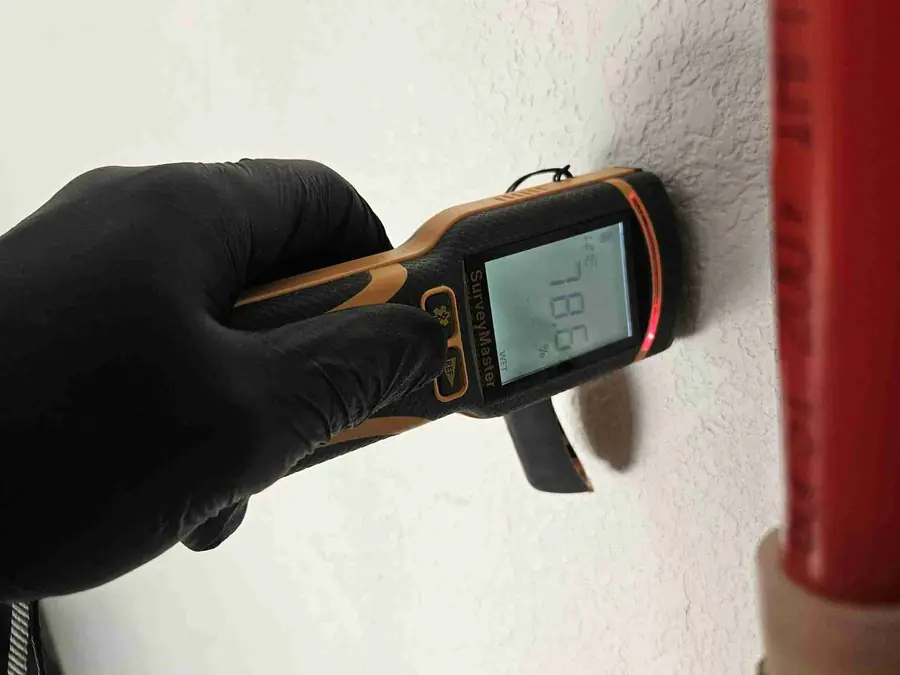
- Moisture detection with thermal imaging and meters, to find wet areas behind walls and under floors.
- Air quality testing when it’s needed, measured against an outdoor sample.
- A written report with photos, readings and next steps.
Most homes take one to two hours on site. If air samples go to a lab, results usually come back in a few business days.
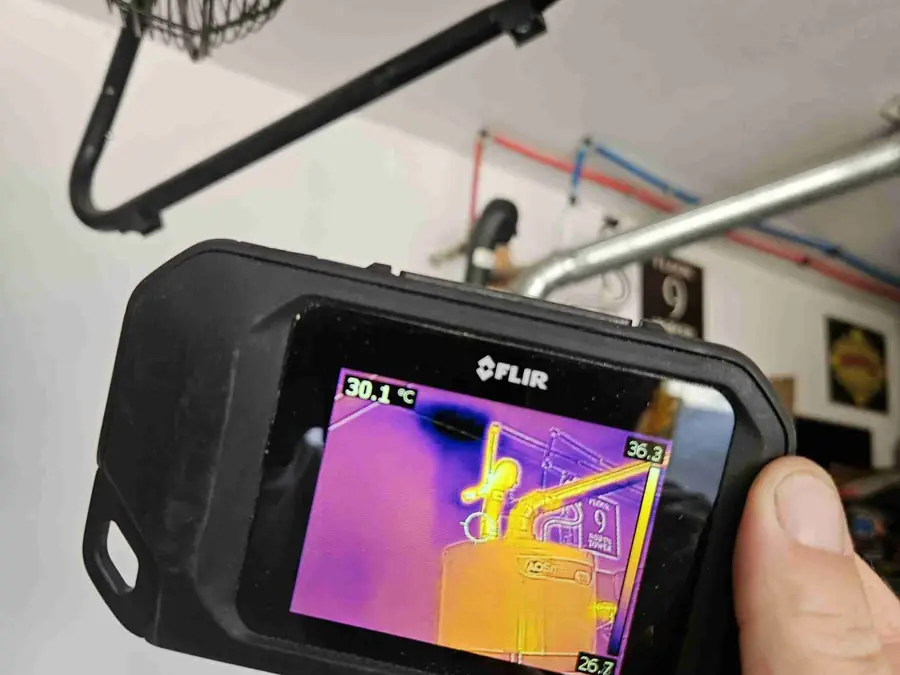
Notice the order. The lab sample is the last tool, not the first, and it’s read against outdoor air so the number means something.
RemediationX’s own reviews show the same order from the customer’s side. Of the 32 written Google reviews on the reviews page, 8 mention mold. In 6 of those 8, the customer describes the visit starting with an inspection or assessment before any removal.
5 Situations and Which One Fits
Which one you need depends on what you already know.
- You can see the growth. Skip the test. The EPA says sampling is unnecessary in most cases when visible mold is present.2 If the patch is under about 10 square feet you can usually clean it yourself. Past that size, or with heavy water damage, bring in someone with mold cleanup experience.6 Our post on black mold vs mildew helps you tell what you’re looking at.
- You smell it but can’t see it. Get an inspection. The EPA says to suspect hidden mold when a building smells moldy and you can’t find the source. It also warns that digging for it can release spores, and peeling wallpaper is its example.6
- You had a leak in the last day or two. Don’t test anything. Dry it. The EPA’s window is 24 to 48 hours to dry wet areas and items before mold starts.6 That’s a water damage restoration job, not a mold job yet.
- You need proof for a buyer, a landlord or an insurer. A store kit won’t carry weight. The EPA says sampling should be done by professionals with experience in designing mold sampling plans, using methods from groups like the American Industrial Hygiene Association.2
- The cleanup is done and you want to know it worked. This is where a lab sample earns its cost. The EPA notes surface sampling can help show whether an area has been cleaned well enough.2
Renters in Las Vegas Have a Different Problem
Many kit buyers in the valley are tenants trying to prove something to a landlord. The kit is the wrong tool for that too.
The Health District says it has no enforcement power over rental housing. Its page groups mold with bugs, odors and general upkeep as nonessential service complaints. The step it gives is a dated letter to the landlord asking for the repair under NRS 118A, sent certified mail with a return receipt. The problem should be fixed, or real progress made, within 14 business days of the landlord getting the letter. After that a tenant can start a civil case.1
The state law behind that is NRS 118A.355. It calls for written notice that names each failure, and it gives the landlord 14 days after receiving it.7
Nothing in that process asks for a spore count. Dated photos, the letter, and a written report that shows where the water is will do more for you than a petri dish. The Health District page also lists the UNLV landlord tenant hotline and Nevada Legal Services for questions about your own case.1
If You Already Ran a Kit
You’re not in trouble, and you didn’t waste much. Do three things.
- Seal the dish in a bag and throw it out. The Connecticut safety office points out that a growing dish is a small mold problem you made yourself.4
- Don’t read the spots as a diagnosis. Growth on the dish was the likely result in any home.4
- Go look for water. Check under sinks, around the water heater, along baseboards and in the AC closet for stains, soft spots or a musty smell.
Our guide to finding hidden water damage before mold starts walks through where it hides in valley homes.
If you find a wet spot, or the smell won’t leave, that’s the time for an inspection. Ours includes moisture readings, and the assessment is free.
Things to Settle
How accurate are home mold test kits?
A settling plate kit will grow mold in almost any home, because spores are part of normal indoor and outdoor air. So it can’t tell a healthy house from one with a leak in the wall. There are also no accepted standards for reading the result.
Is a mold inspection worth it?
It is when you smell mold and can’t find it, after a leak that sat for more than a day or two, or when you need a written report for a sale, a rental or a claim. If you can see a small patch on a hard surface, you usually don’t need an inspection or a test to clean it.
Do mold inspectors always find mold?
No. An inspection can end with dry readings and no growth found. That’s a real answer, and it’s one a store kit can’t give you.
Do I need to know what type of mold I have?
The CDC says you don’t. Its advice is the same for every type. Remove the mold safely and stop the moisture that let it grow.
How do you test for mold in your house without a kit?
Start with your eyes and nose. Look for stains, bubbling paint, soft baseboards and a musty smell near plumbing and the AC closet. If those turn up nothing and the smell stays, a moisture meter and thermal camera are the next step, and that’s what an inspection brings.
Studies and Pages
| What We Cited | Where It Came From |
|---|---|
| 1. No enforcement over rental housing, mold as a nonessential service complaint, dated letter, 14 business days, hotline and legal aid listings | Southern Nevada Health DistrictNov 2026 |
| 2. Sampling unnecessary with visible mold, no standards or threshold limits, who should sample, surface sampling after cleanup | US EPANov 2026 |
| 3. Kit growth times of 48, 72 and 96 hours, $40 and $60 lab fees, report times | Pro Lab kit instructionsNov 2026 |
| 4. Why settling plate kits mislead, no accepted standards, what to do instead | University of Connecticut Environmental Health and SafetyNov 2026 |
| 5. CDC does not recommend mold testing, no set standards, no need to know the type | CDCNov 2026 |
| 6. Moisture control, hidden mold locations and cautions, 10 square foot limit, 24 to 48 hour drying window | US EPANov 2026 |
| 7. Written notice and 14 days to remedy a habitability failure, NRS 118A.355 | Nevada LegislatureNov 2026 |