
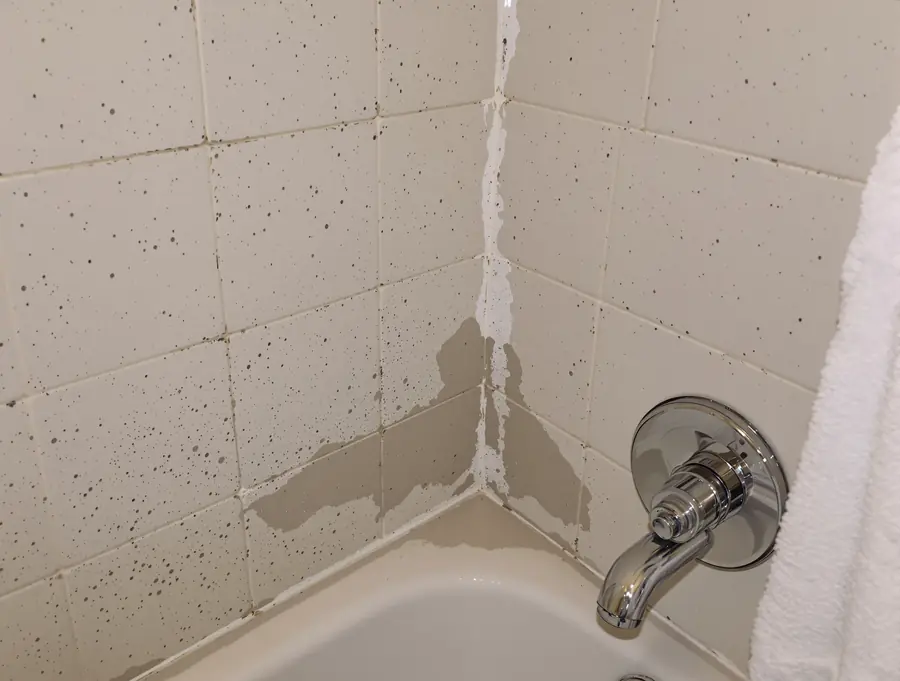
Las Vegas tap water is rated very hard, at 16 to 17 grains per gallon, and it leaves a chalky crust on every shower in the valley.4 So before you decide between black mold and mildew, make sure the spot is alive at all. Mildew is a mold that grows flat on a damp surface, and black mold is a mold that has gotten into the material itself.1 The color doesn’t tell you which one you have, and it doesn’t tell you how risky it is.2 Where it grows does. When a call starts with “I think it’s black mold,” the first thing we ask is what it’s growing on.
Mildew Is a Mold, and Color Is Not the Test
The EPA says mildew is a word for certain kinds of mold, usually ones with a flat growth habit. It often lives on shower walls, windowsills and other spots that stay damp.1
Molds as a group can grow on almost any organic material. That includes clothing, paper, leather, and the walls, ceilings and floors of homes with water problems.1
“Black mold” usually means Stachybotrys chartarum. The CDC calls it a greenish black mold that grows on high cellulose materials like gypsum board, fiberboard and paper, and it needs constant moisture from a leak, condensation or flooding to get going.2
That last part is the real tell. Stachybotrys doesn’t take hold on a tile wall that dries every day. It shows up on drywall that has stayed wet.
Plenty of other molds are dark too. The EPA’s own mold guide shows white and black molds side by side and says molds come in many colors.5 The CDC says mold can look like spots of many colors.3
The CDC says it isn’t necessary to find out what type of mold you have, and all molds should be treated the same for health risk and removal.2 So a lab test that names the species won’t change what you do next.
Four Things You Might See in a Las Vegas Bathroom
Two of the four aren’t mold at all. They’re common here because of our water.
White Chalky Crust
Hard water leaves a chalky buildup on fixtures and spots on glass, according to the Las Vegas Valley Water District. It’s calcium and magnesium carried in from the Colorado River, and the district says it doesn’t affect your health.4
It sits in a hard ring around the shower head, the valve and the bottom of the glass. It feels gritty and doesn’t smear. That’s scale, not mildew.
Pink or Orange Film
The pink ring on a shower curtain, tub or toilet is usually the airborne bacteria Serratia marcescens, per the water district. It shows up most in spring and summer, and it isn’t coming from the tap water.4
The district’s fix is regular cleaning with chlorine bleach. It’s a nuisance, not a mold problem.4
Flat Gray or Black Spots on Grout and Caulk
This is classic mildew. It sits on the surface, often in speckles along the grout lines and the caulk bead at the tub. It wipes off a sealed tile face with a scrub brush.
If the spots come back fast or sit under the caulk instead of on it, water is getting behind the seal. That’s when mildew stops being a cleaning chore.
Fuzzy or Slimy Dark Patches on Drywall
Growth on the painted wall, the ceiling, the baseboard or inside a cabinet is in the material, not on top of it. The EPA says porous materials like ceiling tile and carpet may have to be thrown out once they’re moldy, because mold fills the gaps inside them.5
This is the one people mean when they say black mold, whatever the color.
Where It Grows Tells You More Than What It Looks Like
Our desert air dries most surfaces fast. So growth that keeps coming back in a Las Vegas home almost always has a water source you can find.
- A bathroom with no working exhaust fan, or one nobody runs.
- A slow drip under a sink, behind a toilet or behind the washer.
- An AC drain pan or condensate line that backs up. The EPA lists clean drip pans and clear drain lines as a mold control step.5
- Condensation on cold water pipes or a window.
- A leak inside a wall or under the slab that nobody has seen yet.
Check the humidity before you blame the climate. The EPA says to keep indoor humidity below 60 percent, ideally 30 to 50 percent, and a meter costs about $10 to $50 at a hardware store.5
If the room reads dry and growth still returns, look for the leak. Our guide to finding hidden water damage before mold starts covers where it hides in valley homes, and a washer is a common one, as our washing machine leak guide explains.
A musty smell matters too. The EPA says molds can make a strong musty odor in unaired places.1 A smell with no visible spots often means growth behind a wall or under flooring.
Clean It Yourself or Call for Help
Surface mildew on tile, glass or a tub is a cleaning job. The EPA says to scrub mold off hard surfaces with detergent and water, then dry them completely.5
- Wear gloves and goggles without vent holes. The EPA recommends both.5
- If you use bleach, ventilate the room. Never mix bleach with cleaners that contain ammonia, because the fumes are toxic.5
- Don’t paint or caulk over mold. The EPA says to clean it and dry the surface first, because paint over mold is likely to peel.5
- Scrub it off, don’t just kill it. Dead mold can still cause allergic reactions, so it has to be removed.5
The size of the patch decides the rest. The EPA says a moldy area under about 10 square feet, roughly 3 feet by 3 feet, is usually a job you can handle yourself.5 Bigger than that, or after a lot of water damage, it points you to its professional cleanup guidance instead.5
Health is the other line. The CDC says mold can cause a stuffy nose, sore throat, coughing, wheezing, burning eyes or a skin rash. People with asthma or mold allergies can react more strongly, and people with weak immune systems or lung disease can get infections from it.3 If someone in the house fits those groups, don’t make them the one scrubbing.
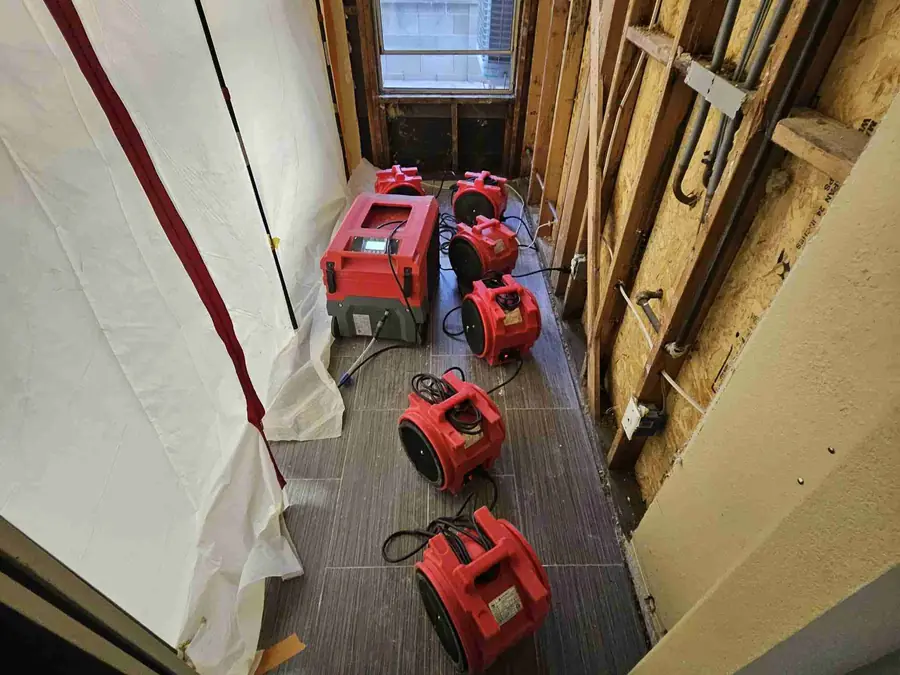
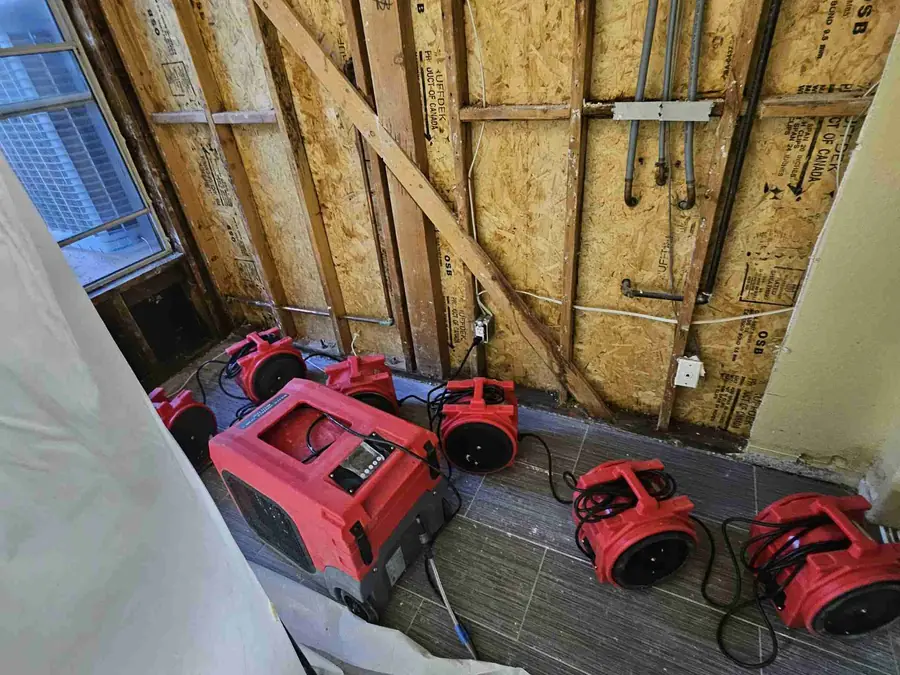
Growth inside drywall, under flooring or in the AC closet needs more than a sponge. The wet material comes out, the leak gets fixed and the space gets dried. Our black mold removal page shows how that job runs, and a mold inspection can find growth you can only smell.
Keep the Shower From Growing It Back
The EPA admits places that are always damp are hard to keep fully free of mold. Its fix for a shower where mold keeps coming back is more airflow and more frequent cleaning.5
- Run the bath fan or open a window every time you shower.5
- Squeegee the walls and glass so they dry in minutes, not hours.
- Replace caulk that has pulled away or stays dark after scrubbing.
- Fix drips the week you find them, and dry anything wet within 24 to 48 hours.5
- Keep the AC drain line clear, especially after a long cooling season.5
Wipe the white crust off with a cleaner made for hard water scale. It isn’t mildew, but rough scale gives grime a place to cling.
We close where we started. Don’t judge it by color. Judge it by what it’s growing on and how wet that spot stays, and you’ll know whether you need a scrub brush or a crew.
Things to Settle
Is it mold or mildew in my shower?
Flat gray or black speckles on sealed tile, grout or caulk that scrub off are mildew, which is a type of mold. Growth that’s fuzzy, comes back fast, or sits under the caulk or on the drywall means moisture is getting into the material.
Is mildew dangerous?
Mildew is a mold, so it can cause the same allergy type symptoms as other molds, like a stuffy nose, coughing or itchy eyes. People with asthma, mold allergies or weak immune systems should keep exposure low. On a sealed shower surface it’s usually a cleaning job.
Is black mold more dangerous than other mold?
The CDC says no test proves Stachybotrys causes particular health symptoms, and it says all molds should be treated the same for health risk and removal. What matters is how much is growing and why.
What does mildew smell like?
Musty, like wet laundry left too long. A strong musty smell in a closed room with no visible spots can mean mold behind a wall or under flooring.
How fast does black mold spread?
The EPA says wet areas should be dried within 24 to 48 hours to prevent mold growth. Stachybotrys needs constant moisture, so it spreads as long as the leak or condensation keeps feeding it.
What kills mildew instantly?
Scrubbing with detergent and water removes it from hard surfaces. Bleach also works if the room is ventilated, but never mix it with ammonia cleaners. Removing the growth matters more than killing it, since dead mold can still cause allergies.
What is the pink stuff in my Las Vegas shower?
Usually a harmless bacteria called Serratia marcescens, not mold. The Las Vegas Valley Water District says regular cleaning with chlorine bleach takes care of it.
Studies and Pages
| What We Cited | Where It Came From |
|---|---|
| 1. What mildew is, where it grows, musty odor | US EPANov 2026 |
| 2. Stachybotrys color and materials, no need to name the mold type, no proven link to particular symptoms | CDCNov 2026 |
| 3. Mold symptoms and who is at higher risk | CDCNov 2026 |
| 4. Water hardness of 16 to 17 grains per gallon, chalky buildup, pink film | Las Vegas Valley Water DistrictNov 2026 |
| 5. Humidity targets, drying window, 10 square foot limit, cleanup safety, shower tips | US EPANov 2026 |