
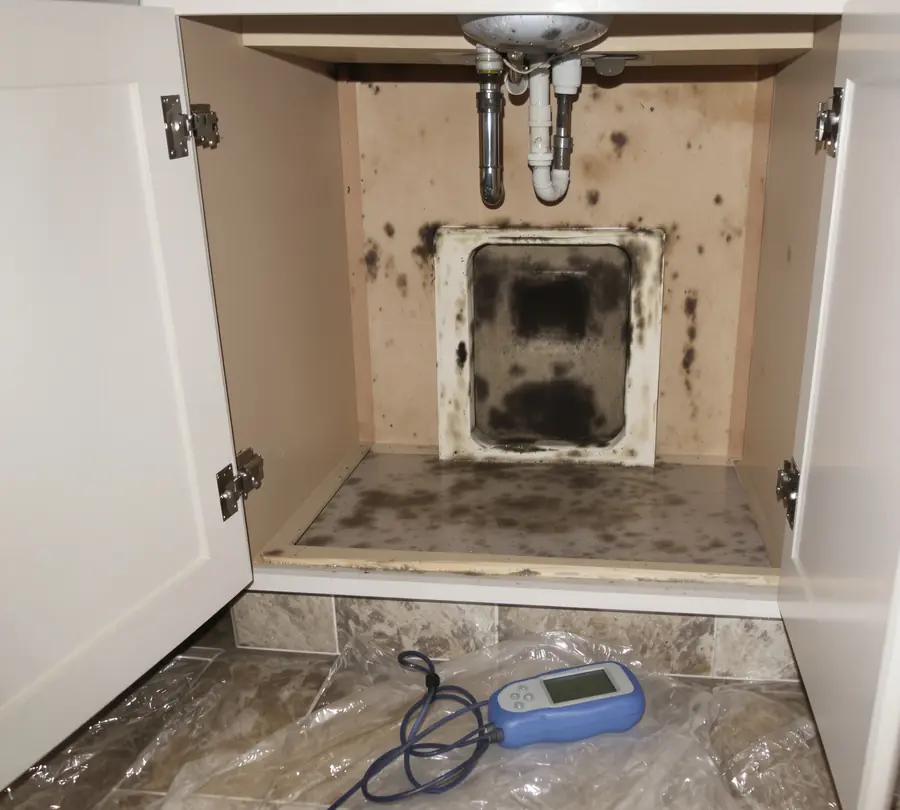
In Nevada, an insurer that turns down your claim because of a policy exclusion has to say so in writing and name that exclusion.1 That rule matters more for mold than almost anything else in your house, because mold is where the exclusions live. Home insurance usually covers mold when it grows out of a sudden water loss the policy already covers, like a burst pipe, and usually won’t when it grew from a slow leak, a flood or upkeep that was put off. We see both kinds of claims across the valley. The difference often comes down to what happened in the first two days.
5 Times a Nevada Home Policy Usually Pays for Mold
Mold coverage almost always rides on the water that caused it. If the water was sudden and accidental, the mold that followed has a shot. The list below is what standard policies and common add ons tend to cover.23
- A burst pipe or supply line. This is the textbook covered loss. Water comes out all at once, you find it fast and the mold that follows is part of the same claim.2
- A water heater that leaks or ruptures. A failed tank counts as a sudden discharge. In a valley full of garage water heaters, this is a common one.3
- An appliance overflow. A dishwasher that floods the kitchen floor is listed as covered.3
- A leak hidden in a wall, if you bought the add on. Some insurers sell hidden water damage coverage for leaks inside walls, under floors or behind appliances. Without it, a slow hidden leak is often denied.3
- A drain or sewer backup, with a backup endorsement. Backups are excluded on a base policy. Water backup coverage brings in mold from backed up drains and clogged sewer lines.3
A mold or fungus endorsement can raise the cap on any of these. One USAA policyholder in a 2024 news story had extra fungus, wet or dry rot coverage of up to $15,000.2
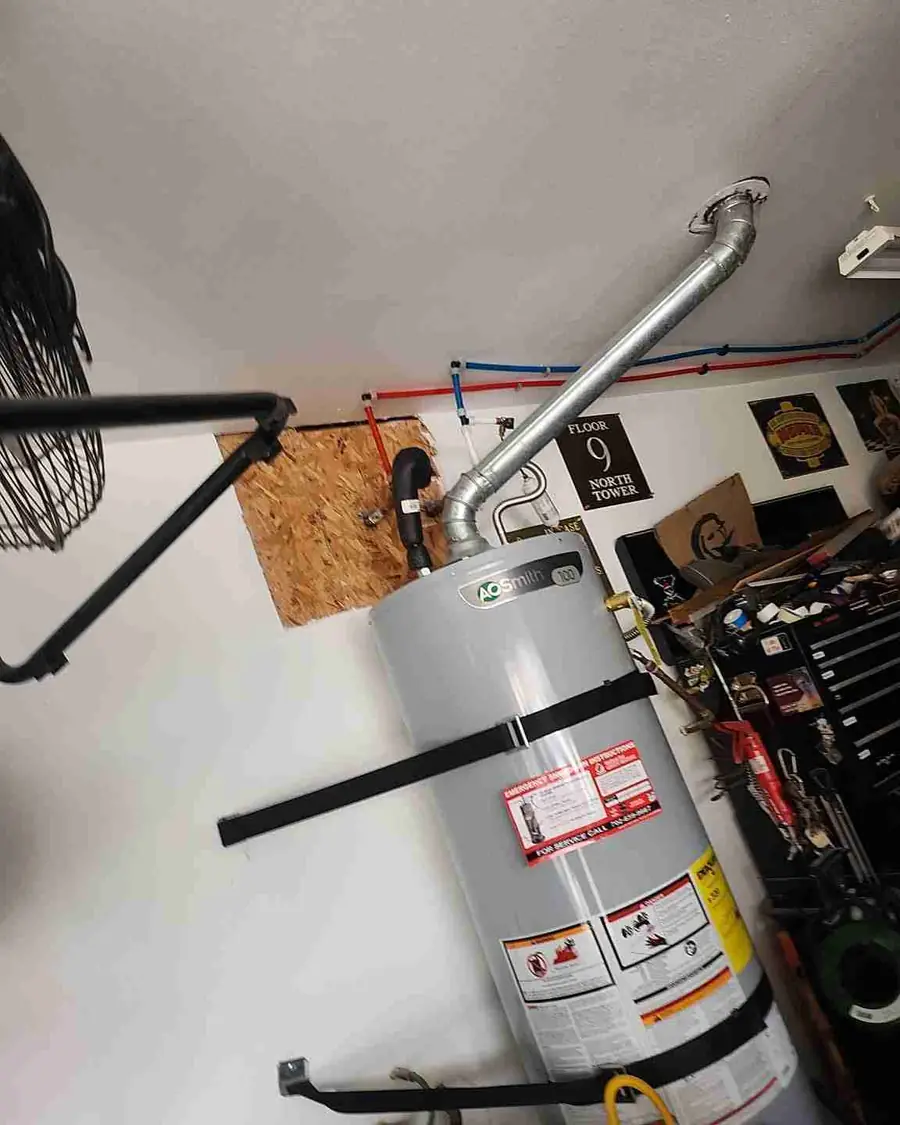
4 Times It Won’t, and Why Las Vegas Homes Hit These Most
Denials follow a pattern too. Each of these is a reason insurers give often enough that you should expect it.
- The leak ran for weeks. An Insurance Information Institute spokesman said in 2024 that mold present for several weeks or longer likely won’t be covered.2
- The leak was known and not fixed. Failed seals around sinks and faucets, and a drip you knew about, are treated as upkeep, not a sudden loss.3
- It came from humidity or a shower. Mold from poor airflow, or the mold in a shower, is not covered.3
- It came from a flood or ground water. Home policies don’t cover flooding at all. A separate flood policy is needed, and even that one excludes mold the owner could have prevented.45
The first one is the trap in this city. Our air is dry, so mold here rarely comes from the weather. It comes from water that stays in one spot for a long time. A slow drip under a sink, an AC drain pan that keeps spilling into a closet or a slab leak under the floor can keep one patch wet for months.
That is exactly the slow, repeated kind of leak policies are written to exclude. So in Las Vegas the clock is the claim. The sooner a leak is found and dried, the more likely the mold stays inside a covered loss.
Flood Policies Have the Same Catch
A flood policy from the National Flood Insurance Program lists damage from moisture, mildew or mold that the owner could have avoided as not covered.5 FEMA has upheld that line on appeal. In one case, mold turned up about five months after a 2019 flood, and the denial stood because the policy excludes damage that results from failing to inspect and maintain the home after the water goes down.6
Nevada’s own flood guide adds one more thing to know. A new flood policy usually takes up to 30 days to start, so it has to be bought well before a storm.4
Find Your Mold Cap Before You Need It
Even when mold is covered, it usually has its own smaller limit. That limit can be far below the cost of the job.
A 2024 CNBC report gave two real examples. USAA pays $2,500 for mold cleanup and $2,000 for extra living costs from a covered loss in most states. Nationwide pays up to $10,000 for mold from covered incidents, and that cap can’t be raised.2 Insurance.com puts common mold caps at $1,000 to $10,000.3
One detail helps you. Only the mold part of the repair counts against the mold cap. Fixing the pipe damage, drying and rebuilding can fall under your regular dwelling coverage.3 So a good scope that keeps water work and mold work on separate lines can matter a lot.
To find your number, look on the declarations page and the endorsements for words like fungi, mold, or wet or dry rot. If you can’t find it, ask your agent for the exact limit in writing.
Nevada’s Claim Clock and What Your Insurer Owes You
Nevada sets deadlines for how an insurer handles your claim. They sit in the state’s insurance rules, NAC 686A.670 and 686A.675.1
- 20 working days after notice of the claim to start investigating, and to send you a list of the forms and papers it expects to need.
- 30 days after notice to finish the investigation, unless it truly can’t be done in that time.
- 30 working days after you send a signed proof of loss to accept or deny the claim. If it needs more time, it must tell you why, then write again every 30 days.
- 30 days to pay after it accepts. Late payment owes interest.
- A written denial that names the exact provision, condition or exclusion it relies on.
- 60 days of written warning before a policy time limit runs out, if you don’t have a lawyer and talks are still going.
That written denial is your best tool on a mold claim. If the letter names a mold or seepage exclusion, you can line it up against your own photos and dates. If the facts say the water was sudden, you have something real to push back with. The Nevada Division of Insurance helps people with questions about how an insurer handled a claim.4
What to Do in the First 48 Hours so the Claim Holds Up
The EPA says to dry water damaged areas and items within 24 to 48 hours to prevent mold, and to fix plumbing leaks as soon as you can.7 Those two lines are also the best claim advice you’ll get.
- Shut the water off at the fixture or the main.
- Take photos and video of the water, the source and the dates before anything is moved.
- Report the claim to your insurer the same day, and write down the claim number and who you spoke with.
- Get drying started. Waiting on an adjuster is not a reason to let a wall sit wet.
- Keep every letter and email. If a denial comes, you’ll want the timeline.
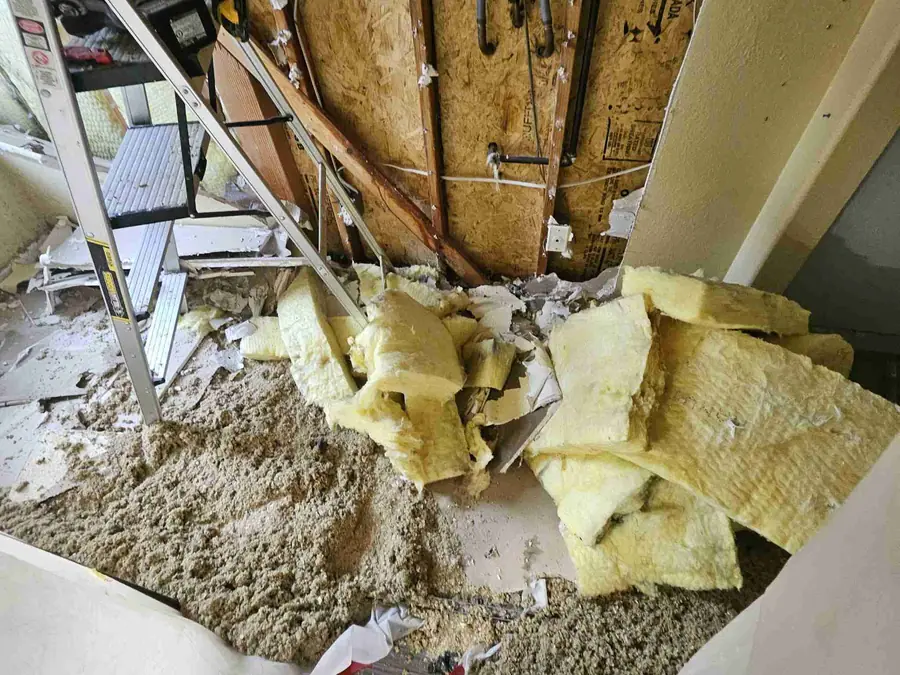
On a RemediationX job, the adjuster gets photos of the damage and the source, moisture readings with the IICRC water category and class, an itemized estimate written in Xactimate, and supplements when hidden damage turns up after demolition. That record is what ties the mold back to the sudden water that started it. Our insurance claims process page walks through each step.
Customers notice that part. Of the 32 Google reviews on the RemediationX reviews page, 4 talk about the insurance claim or the adjuster, and all 4 are five stars.
If mold is already growing, the job is mold remediation, which starts by finding and fixing the water that fed it. If it’s still just wet, it’s water damage restoration, and that’s the cheaper call to make.
Things to Settle
Does homeowners insurance cover mold in Nevada?
Sometimes. A standard policy usually covers mold that grows from a sudden covered water loss, like a burst pipe or a failed water heater. It usually won’t cover mold from a slow leak, a known leak that wasn’t fixed, humidity or a flood. Most policies also put a lower dollar cap on mold.
How do I get insurance to cover mold removal?
Tie the mold to a sudden water event and act fast. Report the claim right away, photograph the source, start drying within 48 hours and keep moisture readings and dates. If the claim is denied, Nevada rules say the denial has to be in writing and name the exclusion, so you can check it against your records.
Does flood insurance cover mold?
Only in part. A flood policy covers flood damage, but it lists mold, mildew and moisture damage the owner could have prevented as not covered. FEMA has upheld denials where mold showed up months after a flood. Dry the house as soon as you can get back in.
What kind of water damage is not covered by insurance?
Floods, ground water seepage, slow leaks that ran for weeks, known leaks left unfixed and drain or sewer backups without a backup endorsement are common exclusions. Your own policy has the final word, so read the exclusions section and any endorsements.
Can a mold claim cause problems with my policy later?
It can. A 2024 CNBC report said some homeowners who complained to the FTC about their insurers reported their policy was not renewed after a mold claim. That’s one more reason to stop the water early, while it’s still a water claim.
Studies and Pages
| What We Cited | Where It Came From |
|---|---|
| 1. Deadlines to investigate, accept or deny and pay a claim, written denials that name the exclusion, 60 day notice before a time limit, NAC 686A.670 and 686A.675 | Nevada Legislature, Nevada Administrative CodeNov 2026 |
| 2. Mold covered after a sudden peril, several weeks or longer likely not covered, USAA and Nationwide mold caps, $15,000 fungus add on, nonrenewals after mold claims (CNBC story, August 2024) | United PolicyholdersNov 2026 |
| 3. Covered and excluded mold cases, hidden water and water backup add ons, common mold caps, mold cap applies only to the mold part of a repair | Insurance.comNov 2026 |
| 4. Home policies don’t cover flooding, flood policies take up to 30 days to start, preventable mold not covered, Division help with claim handling | Nevada Division of Insurance, 2026 Flood Insurance Consumer GuideNov 2026 |
| 5. Moisture, mildew or mold damage the owner could have avoided is not covered | FEMA, NFIP Summary of CoverageNov 2026 |
| 6. Appeal decision upholding a mold denial found about five months after a 2019 flood | FEMA FloodSmartNov 2026 |
| 7. Dry water damaged areas within 24 to 48 hours, fix plumbing leaks as soon as possible | US EPANov 2026 |