
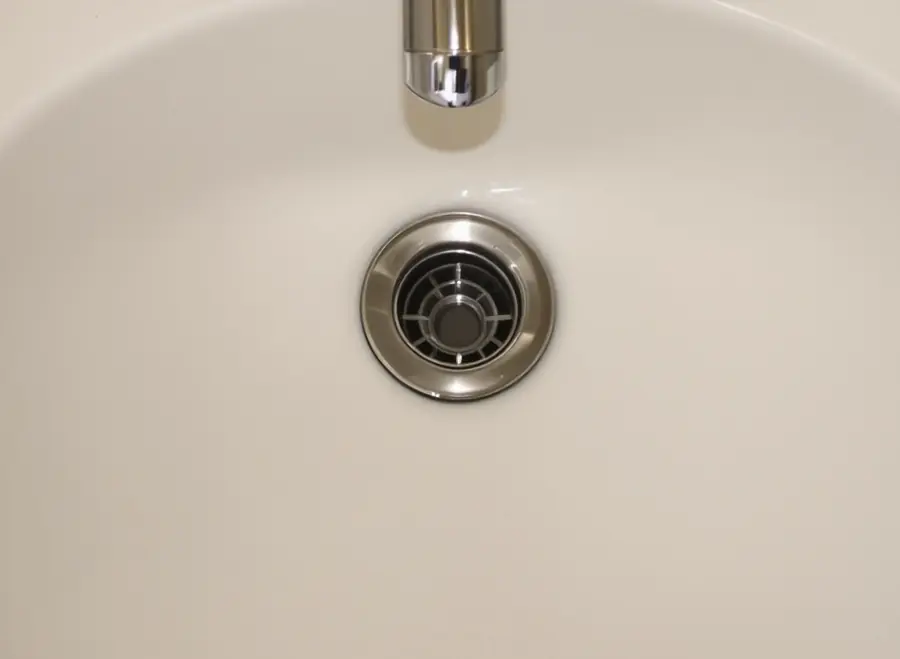
The desert air pulls about 6 feet of water off Lake Mead every year.1 The few inches of water sitting in your drains live in that same dry air. When a house smells like sewage in the Las Vegas valley, the first suspect is a drain trap that dried out, not a broken sewer line. That fix costs a glass of water. We wrote this so you can rule it in or out in five minutes, and know which smells mean you need a plumber or a cleanup crew.
Why Drain Traps Dry Out in Las Vegas Homes
Every sink, tub, shower and floor drain has a bend under it called a trap. The bend holds a plug of water. That water is the only thing stopping gas from the sewer from coming up into the room.
Plumbing code sets that water seal at no less than 2 inches and no more than 4 inches deep.2 So the whole barrier between you and the sewer is about as deep as a coffee mug is tall.
Water that sits still in a dry house evaporates. Where a trap is likely to lose its seal that way, the code calls for a trap primer that tops it off, or a barrier device made for the job.2 Many older homes in the valley have neither.
How Fast It Can Happen
Lake Mead loses an average of 1,896 millimeters a year to evaporation, about 6.22 feet.1 That works out to roughly 0.2 inch a day. At that open water rate, a 2 inch seal would be gone in about 10 days. A 4 inch seal would last about 20.
Your trap sits indoors and out of the sun, so it usually dries slower than an open lake. Still, the math shows why a dry trap is common here and why a few weeks is enough to worry about.
The Drains That Dry First
- The guest bath. A shower or tub nobody has used since the last visit.
- Floor drains. Laundry rooms and garages often have one, and nothing ever runs into it.
- A second home or a long trip. Snowbirds who leave for the summer come back to a house that smells like a sewer.
- A wet bar or utility sink. Small sinks that get used once a season.
The Five Minute Test for a Sewer Smell
Start with the water itself. The Las Vegas Valley Water District suggests a simple check. Fill a clean glass at the tap, step out of the room and smell the water after a few seconds.3 If the glass smells clean, the problem is in a drain, not the water.
Then walk the house with your nose.
- Run water in every sink, tub and shower for about a minute. Start with the rooms you use least.
- Pour a few quarts of water into each floor drain in the laundry room and garage.
- Flush every toilet, even the one in the spare room.
- Close the doors and come back in an hour. Then check again the next morning.
If the smell is gone and stays gone, you found it. A trap ran dry and you just refilled it. For a drain that sits for months, ask a plumber about a trap primer or a barrier device made for floor drains.2
If the smell comes back within a day, the trap isn’t the whole story. Something is letting gas in past the water, or the water is leaving faster than it should.
Things That Smell Like Sewage but Aren’t the Sewer
A rotten egg smell is hydrogen sulfide. People can smell it at very low levels, somewhere from 0.01 to 1.5 parts per million.6 Several things in a house can make it.
The Water Heater
If only the hot water smells, look at the tank. The water district says the metal rod inside some water heaters can turn the sulfate in our water into sulfides, and that makes a rotten egg smell.3 A heater set too low, or one that sat off for a long time, can do it too.3
Valley water carries a lot of sulfate. The district’s 2026 summary lists an average of 209 parts per million, under the 500 limit for taste and smell.4 GE Appliances says high sulfate water can react with the anode rod and suggests a rod made of a less active metal.5 That’s a job for a plumber or the heater’s maker, not a cleanup crew.
Gunk in the Drain
A sink can stink with a full trap. The water district lists a buildup of food, hair, soap and bacteria as a common cause of drain odor.3 It suggests running hot water, then a cup of baking soda and a cup of white vinegar, then more hot water after 5 to 10 minutes.3
Natural Gas
This one matters most. Natural gas has no smell on its own, so Southwest Gas adds one that smells like sulfur or rotten eggs.7 If the smell is near the stove, the water heater, the furnace or the gas meter, don’t test drains. Get everyone out, don’t flip switches or touch the thermostat, and call 911 and Southwest Gas once you’re outside.7
When a Sewer Smell Means a Leak or a Backup
Some smells come back no matter how much water you pour. These point to a real break, and a real break usually means wet building materials somewhere.
- A toilet that smells at the base. The wax ring under it may have failed. Look for a soft floor or a stain on the ceiling below.
- A smell inside a wall. A cracked drain or vent pipe behind the drywall lets gas out where no trap can stop it.
- Gurgling and slow drains in more than one room. That points to the main line out to the street.
- A wet spot that keeps growing. Water from a drain line is dirty water, even if it looks clear.
We saw that pattern on a Henderson sewer line job. The owners thought a laundry room ceiling was sweating. The real cause was a cracked sewer line behind the upstairs vanity that had soaked two floors of the home.
When you can’t see the source, leak detection finds it without tearing open every wall. A drain line under the floor can act a lot like a slab leak, so the warning signs overlap.
Who Owns the Pipe to the Street
In the City of Las Vegas, private property owners have to maintain the sewer line on their property, up to where it meets the city main.8 The city maintains the main lines, which usually run under the street.8
So a clog or break in your yard is yours to fix with a licensed contractor. A problem in the public main, or damage from nearby construction, goes to the city.8 Outside the city limits, ask your own sewer agency how it splits the line.
RemediationX doesn’t repair pipes. A licensed plumber fixes the line, and you can find one through the plumber referral page.
Is Sewer Gas Dangerous in a House?
At the low levels you smell from a dry trap, the main risk is feeling lousy. OSHA says long exposure to hydrogen sulfide at 2 to 5 parts per million may cause nausea, watery eyes, headaches or poor sleep.6 Some people with asthma may have trouble breathing.6
Your nose is not a safe gauge. OSHA notes that at 100 to 150 parts per million, people lose the ability to smell hydrogen sulfide at all.6 A smell that fades on its own doesn’t always mean the gas is gone.
A dry trap in a house won’t usually reach those levels. But a strong smell that makes anyone dizzy or sick is a reason to open windows, get out and call for help, not to keep looking for the drain.
What to Do When Sewage Reaches the Floor
Once sewage comes out of a drain, it’s no longer a smell problem. Sewage is Category 3 water, the dirtiest kind, and it soaks into drywall, carpet and wood.
- Stop using water. Don’t flush or run taps until the line is cleared.
- Keep kids and pets out of the area.
- Don’t run the heating or air if its return pulls air from that room.
- If you have to step in it, wear rubber boots, rubber gloves and goggles.9
- Wash anything you wore in hot water and detergent, apart from other laundry.9
The CDC says to throw away anything you can’t clean or dry quickly, and to remove drywall and insulation that sewage has touched.9 Wiping a wall with bleach leaves the inside of it dirty.
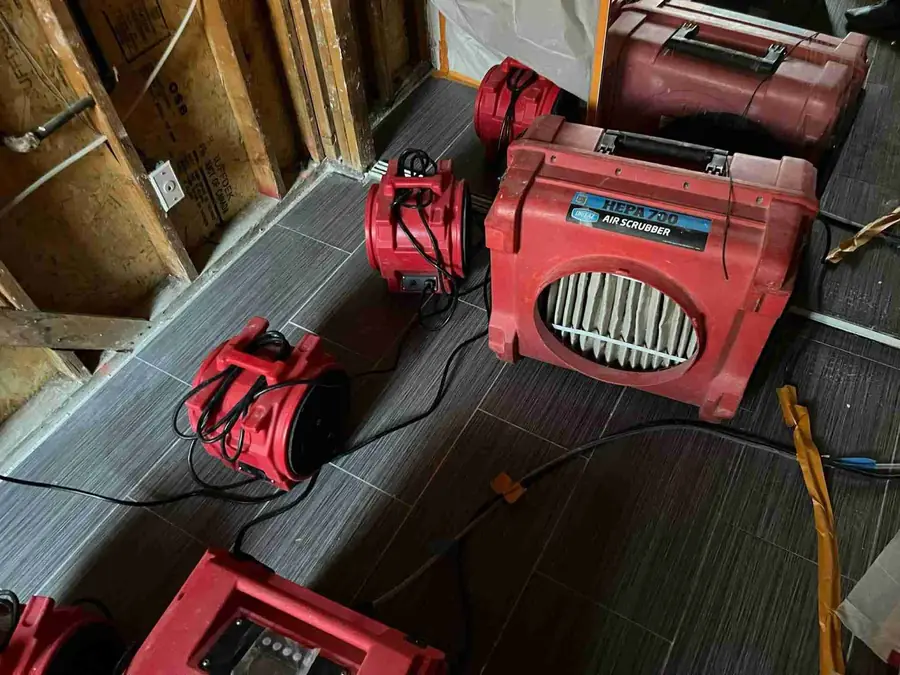
We’d rather you pour a glass of water down a dry drain and never need us. But if the smell came with a wet floor, a stain or a backup, our sewage cleanup crew removes the waste, sanitizes what’s left and dries the house so it’s safe again.
Things to Settle
Is it safe to stay in a house that smells like sewer?
A faint smell from a dry trap is usually more unpleasant than harmful, and refilling the trap fixes it. Leave and get help if the smell is strong, makes anyone sick or dizzy, or smells like rotten eggs near a gas appliance, since that could be natural gas. Stay out of any room where sewage has backed up until it’s cleaned.
Will sewer smell go away on its own?
Not if the cause is still there. A dry trap keeps letting gas in until you add water. A cracked pipe or failed wax ring keeps leaking. And a smell that fades can fool you, because OSHA says high levels of hydrogen sulfide stop you from smelling it.
What smells like sewage that isn’t sewage?
The most common ones are a water heater that turns the sulfate in valley water into a rotten egg smell, gunk built up in a sink drain, and natural gas, which has a sulfur smell added on purpose. If only the hot water smells, it’s likely the heater.
How long does it take a drain trap to dry out?
It depends on the room, the heat and the trap. At the rate Lake Mead loses water to the air, a 2 inch seal would be gone in about 10 days, but a trap indoors usually lasts longer. Run water in unused drains every week or two, and more often in summer.
What kills sewer smell in a house?
Water, if the trap is dry. For a smelly sink with a full trap, the water district suggests hot water, then baking soda and white vinegar, then more hot water. Air fresheners only hide it. If the smell keeps coming back, have a plumber find the leak.
Who pays to fix the sewer line to my house in Las Vegas?
In the City of Las Vegas, the owner maintains the private sewer line on their property up to the city main, and the city maintains the main. Outside the city limits, ask your own sewer agency where its part of the line starts.
Studies and Pages
| What We Cited | Where It Came From |
|---|---|
| 1. Average yearly evaporation at Lake Mead, 1,896 mm or 6.22 feet | U.S. Geological Survey, Nevada Water Science CenterNov 2026 |
| 2. Trap seals 2 to 4 inches deep, trap primers and barrier devices where seals can evaporate | International Code Council, Building Safety JournalNov 2026 |
| 3. Glass test for water vs drain odor, drain odor causes and cleaning steps, water heater rotten egg smell | Las Vegas Valley Water DistrictNov 2026 |
| 4. Sulfate average 209 ppm against a 500 ppm limit, 2026 summary | Las Vegas Valley Water DistrictNov 2026 |
| 5. High sulfate water reacting with the anode rod, replacement rod | GE AppliancesNov 2026 |
| 6. Hydrogen sulfide odor threshold, effects at 2 to 5 ppm, loss of smell at 100 to 150 ppm | OSHANov 2026 |
| 7. Natural gas odorant smells like sulfur or rotten eggs, what to do if you smell gas | Southwest GasNov 2026 |
| 8. Owners maintain private sewer laterals up to the city main, the city maintains public mains | City of Las VegasNov 2026 |
| 9. Boots, gloves and goggles around sewage, discard what can’t be cleaned, remove contaminated drywall and insulation | CDCNov 2026 |